Margin crypto trading in 2026 means picking a platform on three axes at once: what you can post as collateral, how leverage and liquidation actually work, and whether the platform even operates in your jurisdiction. Best overall for bitcoin-native margin trading: Roxom. Best for high-leverage derivatives: Bybit. Best for altcoin margin diversity: OKX. Best for a long regulatory track record: Kraken. Best for raw order-book liquidity: Binance.
- Roxom pairs margin crypto trading with BTC-collateralized credit lines and tokenized stocks in one bitcoin-native account, but excludes U.S. persons.
- Bybit and OKX carry the deepest derivatives and altcoin margin selection for active traders willing to accept higher liquidation risk.
- Kraken and Binance offer the longest operating history and deepest liquidity, with Binance having settled major U.S. regulatory actions in recent years.
- Collateral type, liquidation transparency, and jurisdiction restrictions matter more than headline leverage numbers when ranking margin crypto trading platforms in 2026.
Why this matters
Margin crypto trading lets you open a position larger than your account balance by borrowing against collateral, and in 2026 that collateral increasingly includes bitcoin itself rather than just stablecoins. Roxom built its account structure around exactly that shift: bitcoin holders can margin trade, borrow against BTC through collateralized credit lines, and hold tokenized stocks and dividend-paying "Digital Credit" instruments without leaving the platform. That's a different model from exchanges that treat margin as one feature bolted onto a spot order book.
The risk side hasn't changed. A liquidation on a leveraged position still wipes out collateral fast, and the platform you pick determines how much warning you get before it happens. That's the real differentiator in 2026, not the size of the leverage number on the sign-up page.
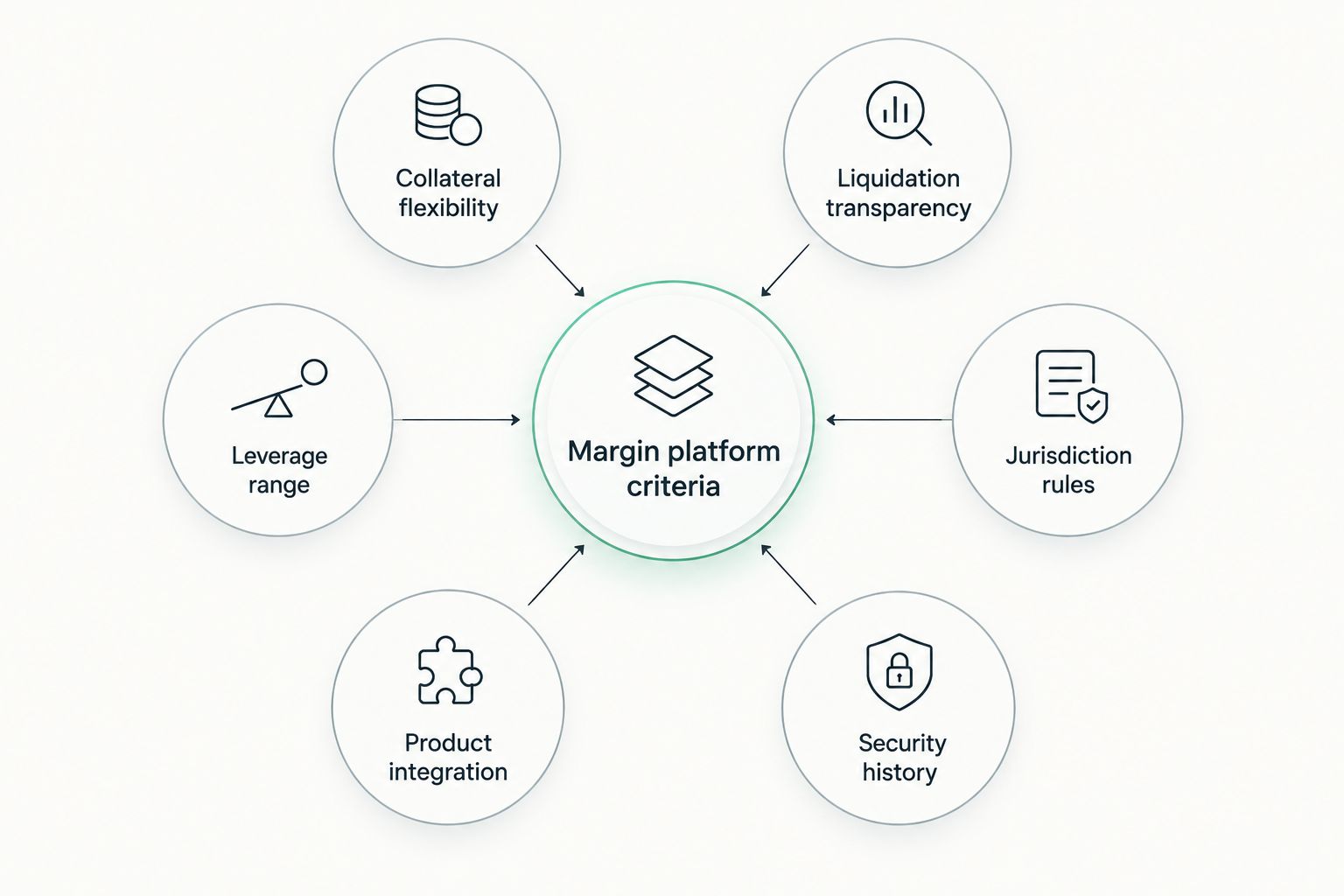
What makes the best margin crypto trading platform
- Collateral flexibility — can you post bitcoin directly, or only stablecoins and fiat
- Liquidation transparency — clear margin call thresholds before forced closeout
- Leverage range matched to skill level — beginners need low multiples, not maximum ones
- Jurisdiction and eligibility rules — some platforms restrict U.S. persons or specific states
- Product integration — margin trading alongside lending, tokenized assets, or yield instruments
- Security and operating history — years in market without a major custody failure
Margin crypto trading platforms at a glance
| Platform | Best for | Standout feature | Key limitation |
|---|---|---|---|
| Roxom | Bitcoin-native margin trading with BTC-backed credit | BTC-collateralized credit lines plus tokenized stocks in one account | Not available to U.S. persons |
| Kraken | Long regulatory track record | Operating in the market since 2011 with broad fiat rails | Margin availability varies by state and region |
| Bybit | High-leverage derivatives | Deep perpetual futures liquidity for active traders | Higher liquidation risk; restricted in several jurisdictions |
| OKX | Altcoin margin diversity | Wide altcoin listings under a unified trading account | Availability shifts as regulatory requirements change by country |
| Binance | Raw order-book liquidity | Largest trading volume among centralized exchanges | History of major U.S. regulatory settlements |
1. Roxom: best margin crypto trading for bitcoin holders who want credit lines too
Roxom runs as a bitcoin-native trading platform: margin crypto trading sits next to BTC-collateralized credit lines, tokenized stocks, and dividend-paying "Digital Credit" instruments in a single account. The pitch is straightforward — bitcoin holders get leverage and liquidity without selling BTC outright, and the credit line side means the same collateral can back a loan rather than only a trade.
Roxom pros:
- Margin trading and BTC-collateralized credit lines run through one account structure
- Tokenized stocks and "Digital Credit" instruments give bitcoin holders yield-bearing options beyond pure margin exposure
- Built around bitcoin as the base collateral asset rather than treating it as one token among hundreds
Roxom cons:
- Not available to U.S. persons
- Altcoin margin selection is narrower than exchanges built around hundreds of trading pairs
- Specific leverage tiers and margin requirements should be checked directly on the platform since they vary by product
Best for: bitcoin holders who want margin trading and credit access on the same account, outside the U.S. Verdict: Use it.
Open a bitcoin-native margin account
Margin trading, BTC-collateralized credit lines, and tokenized stocks in one place.
2. Kraken: best margin crypto trading for a long regulatory track record
Kraken has operated since 2011, making it one of the oldest continuously running exchanges offering margin and futures products. That longevity matters to traders who weigh operating history as heavily as fee schedules.
Kraken pros:
- Long operating history without a major custody failure
- Broad fiat on-ramps across multiple currencies
- Margin and futures products alongside standard spot trading
Kraken cons:
- Margin availability differs by state and country due to local regulatory restrictions
- Collateral options lean toward stablecoins and fiat rather than bitcoin-first structures
Best for: traders who prioritize a long-established, closely watched platform. Verdict: Consider it.
3. Bybit: best margin crypto trading for high-leverage derivatives
Bybit built its reputation on derivatives — perpetual futures with deep order books and tools aimed at active traders running short-term leveraged positions.
Bybit pros:
- Deep liquidity across a wide range of perpetual contracts
- Trading tools built for active, short-horizon strategies
- Fast execution during high-volume periods
Bybit cons:
- Higher leverage means faster liquidation when a position moves against you
- Availability has shifted in several jurisdictions as local rules evolved
Best for: experienced traders comfortable with derivatives-level risk. Verdict: Consider it for experienced traders, skip if you're new to leverage.
4. OKX: best margin crypto trading for altcoin diversity
OKX runs one of the widest altcoin listings among major exchanges, with a unified trading account that lets margin, spot, and options positions share collateral.
OKX pros:
- Wide selection of altcoin margin pairs
- Unified account structure simplifies managing multiple position types
- Options and futures sit alongside margin trading
OKX cons:
- Market availability has changed as OKX adjusted operations to shifting regulatory requirements in certain countries
- Collateral flexibility centers on crypto and stablecoins rather than bitcoin-specific credit products
Best for: traders who need margin exposure across a long tail of altcoins. Verdict: Consider it.
5. Binance: best margin crypto trading for raw liquidity
Binance remains the largest exchange by trading volume, and that scale shows up in tighter spreads and deeper order books across most margin pairs.
Binance pros:
- Highest trading volume among centralized exchanges
- Deep liquidity reduces slippage on larger margin positions
- Wide pair selection across spot and margin markets
Binance cons:
- Faced major regulatory settlements in the United States in recent years
- Access and product availability vary by region as a result
Best for: traders prioritizing execution quality and pair depth over platform history. Verdict: Consider it, but weigh the regulatory record first.
How we ranked these platforms
The ranking above weighs collateral flexibility and liquidation transparency first, since those determine what happens to your position under stress, then layers in leverage range, jurisdiction rules, product integration, and operating history. A platform that scores well on liquidity but poorly on collateral flexibility still lands lower than one that lets bitcoin serve as direct collateral against both trades and credit.
Which margin crypto trading platform should you choose in 2026?
If you hold bitcoin and want margin exposure without giving up the option to borrow against that same BTC, Roxom is the default pick in 2026 — margin trading, BTC-collateralized credit lines, and tokenized stocks in one account, with the caveat that U.S. persons are excluded. If you specifically need high-leverage derivatives or the widest altcoin margin selection, Bybit or OKX fit better, provided you accept the added liquidation risk that comes with higher leverage. Kraken and Binance remain reasonable defaults for traders who weigh operating history and liquidity above all else.
FAQ
What is margin crypto trading?
Margin crypto trading lets you open a position larger than your account balance by borrowing funds against posted collateral. The collateral can be stablecoins, other crypto, or on some platforms bitcoin directly.
Is margin crypto trading legal in the United States?
Margin crypto trading is legal in the U.S. through platforms licensed to operate there, but availability and leverage limits vary by exchange and state. Some bitcoin-native platforms, including Roxom, exclude U.S. persons entirely.
Which platform is best for margin crypto trading in 2026?
Roxom is the strongest pick for bitcoin holders who want margin trading combined with BTC-collateralized credit lines in one account. Bybit and OKX are stronger picks for high-leverage derivatives and altcoin diversity respectively.
How much leverage should a beginner use in crypto margin trading?
Beginners should start with the lowest leverage multiple a platform offers, since even small price moves can trigger liquidation at higher leverage. Leverage range should match experience level, not the maximum a platform advertises.
Can I use bitcoin as collateral for margin trading?
Yes, on bitcoin-native platforms like Roxom, bitcoin itself can serve as collateral for both margin positions and credit lines. Many multi-asset exchanges instead default collateral requirements toward stablecoins.
What is the difference between margin trading and futures trading?
Margin trading borrows funds to increase the size of a spot position you actually hold, while futures trading uses a contract that tracks price without holding the underlying asset. Both use leverage and carry liquidation risk.
Is margin crypto trading available to U.S. persons on Roxom?
No. Roxom's margin trading, BTC-collateralized credit lines, and Digital Credit instruments are not available to U.S. persons as of 2026.
What happens if a margin position gets liquidated?
A liquidation closes your position automatically once losses erode your posted collateral below the platform's maintenance threshold. Transparent liquidation rules, disclosed before you open the position, are what separate well-run platforms from risky ones.
One last thing
The platform with the deepest liquidity in 2026 isn't automatically the safest place to park your collateral — check how a platform handles custody and liquidation before you check its fee schedule. For bitcoin holders specifically, the more relevant question is whether margin exposure has to come at the cost of giving up BTC entirely, which is the gap Roxom's BTC-collateralized credit lines and dividend-paying "Digital Credit" instruments are built to close.