
Best overall for eligible non-U.S. bitcoin holders: Roxom. Best for institutional trading and custody workflows: Coinbase Prime. Best for negotiated block trades: Kraken OTC. Best for U.S. bitcoin-only accumulation: River. This 2026 guide compares those distinct routes so you can choose an exchange based on what you need to do with a large bitcoin position.
- Roxom is the best bitcoin exchange for high net worth investors outside the U.S. who want trading, BTC-backed credit and tokenized assets in one platform.
- Coinbase Prime fits eligible investors who put institutional trading and custody workflows first.
- Kraken OTC fits investors arranging a negotiated block trade; River fits U.S. buyers focused on bitcoin alone.
- Before moving bitcoin in 2026, verify eligibility, custody arrangements, execution terms and collateral rules directly with the provider.
Why this matters
A large bitcoin position creates decisions that a standard exchange comparison misses. You need to know whether an order goes through an on-screen market or a negotiated desk, who controls the assets, and what happens if bitcoin is pledged as collateral. If you are outside the U.S., exchanges for non-U.S. traders add another question: which products can you actually access where you live?
The best platform for buying bitcoin is not automatically the best place to hold it or borrow against it. Keep those decisions separate in 2026. A convenient trading account does not, by itself, answer questions about withdrawal controls, counterparty exposure or the consequences of a falling collateral value.
What makes the best bitcoin exchange for a large portfolio
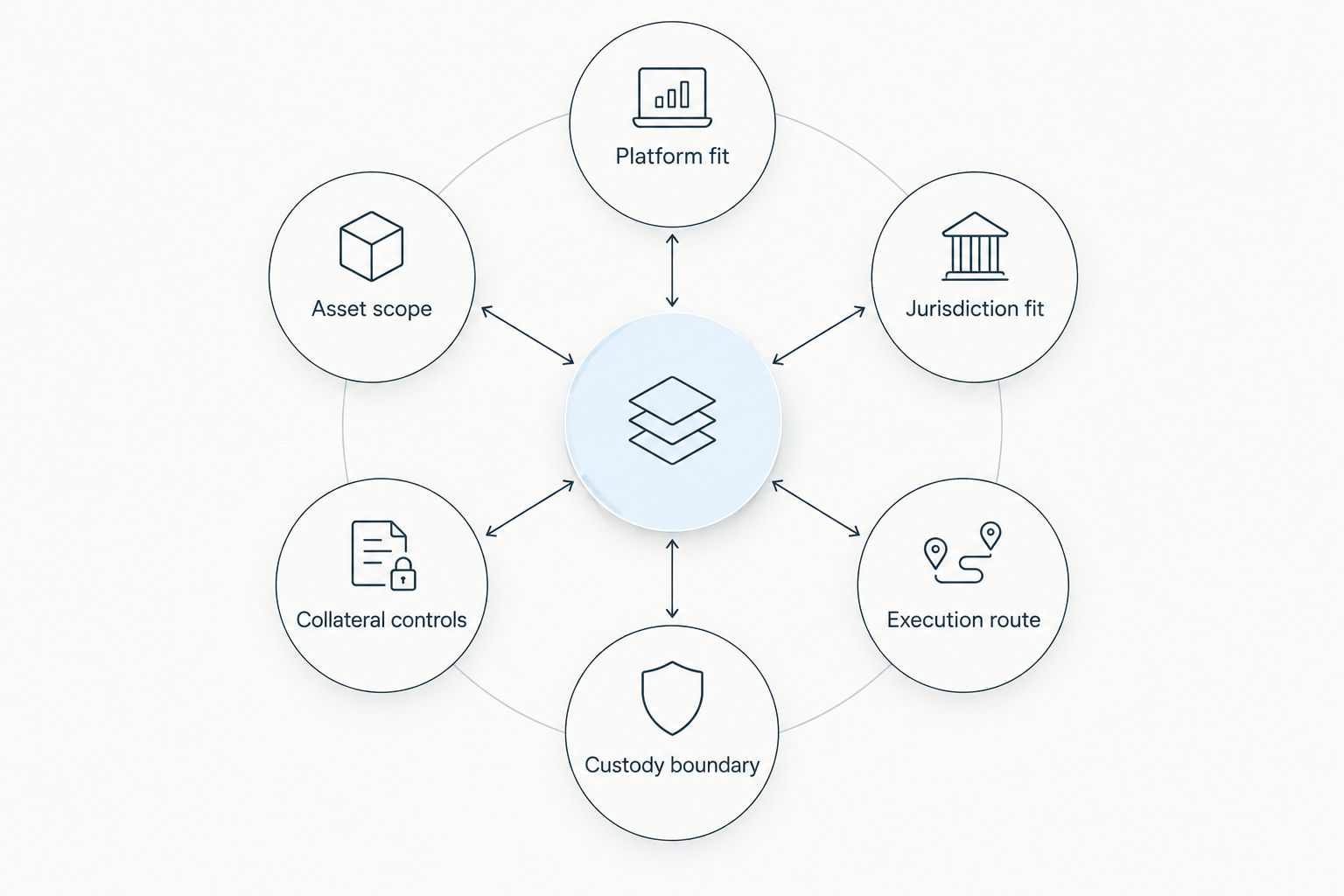
Use these criteria before reading the ranking. They determine whether a platform fits your transaction, rather than whether it has the longest feature list.
- Jurisdiction fit: Confirm that your country of residence and account type qualify for the service you want. A product appearing on a platform does not establish that you can use it.
- Execution route: Decide whether you need a standard order book, an institutional trading workflow or a negotiated OTC trade. Ask how quotes, fees and final execution are presented.
- Custody boundary: Identify who holds the keys while assets are on the platform, which withdrawal controls apply and when bitcoin returns to an address you control.
- Collateral controls: If you intend to borrow against BTC, obtain the applicable collateral, repayment and liquidation terms before depositing it. A bitcoin-backed credit line introduces risks that a spot purchase does not.
- Asset scope: Decide whether you need bitcoin alone, broader crypto trading or access to tokenized instruments. Do not treat a tokenized instrument as identical to the asset it references.
- Operational fit: Check account eligibility, documentation, funding, reporting and support for the exact activity you plan to undertake. Verify current terms rather than relying on a category label.
In 2026, custody questions deserve their own review. Bitcoin targets an average block interval of about 10 minutes, but a network confirmation is not the same as an exchange credit or an approved withdrawal. Ask each provider what its displayed balance means and when you can move it.
Best bitcoin exchanges at a glance
The 2026 ranking assigns each option a different job. The table identifies a starting point, not a substitute for checking the terms that apply to your account.
| Platform | Best for | Standout feature | Key limitation |
|---|---|---|---|
| Roxom | Eligible non-U.S. holders seeking several uses for BTC | Bitcoin and crypto trading, BTC-collateralized credit lines and tokenized instruments | Excludes U.S. persons; credit adds collateral risk |
| Coinbase Prime | Eligible investors prioritizing institutional workflows | Institutional trading and custody services | Access and account fit require direct confirmation |
| Kraken OTC | Investors seeking a negotiated block trade | OTC execution route | A desk is not a complete long-term custody plan |
| River | U.S. investors focused on buying and holding bitcoin | Bitcoin-focused brokerage | Narrow fit if you want to trade other cryptoassets |
1. Roxom: best bitcoin exchange for eligible non-U.S. BTC holders
Roxom is a bitcoin-native trading platform for bitcoin holders and investors outside the U.S. It combines bitcoin and crypto trading with BTC-collateralized credit lines, tokenized stocks and dividend-paying Digital Credit instruments. Roxom is best for eligible non-U.S. holders who want to assess trading, credit and tokenized investments on one platform.
That combination matters only if you intend to use more than spot trading. A credit line puts BTC collateral at risk if the position breaches its terms; an investment instrument brings its own issuer and product risks. Check the terms of each product separately rather than treating access through one account as one risk decision.
Roxom pros:
- Covers bitcoin and broader crypto trading.
- Offers BTC-collateralized credit lines for investors considering liquidity without an immediate BTC sale.
- Includes tokenized stocks and dividend-paying Digital Credit instruments.
Roxom cons:
- U.S. persons are excluded, so it is not a choice for that audience.
- Borrowing against BTC exposes collateral to the credit line's terms and bitcoin price movements.
- Tokenized instruments require a separate review of rights, issuer exposure and eligibility.
Best for: Eligible non-U.S. bitcoin holders comparing several potential uses for their BTC.
Verdict: Buy the fit, not the feature count. Shortlist Roxom if you qualify and expect to use its broader range; hold off on a deposit until you have checked the specific trading, credit or instrument terms you need.
2. Coinbase Prime: best for institutional trading and custody workflows
Coinbase Prime is Coinbase's institutional platform for trading and custody services. It belongs on this list when the priority is an institutional account workflow rather than access to every bitcoin-related product. Confirm that your investor or entity type qualifies before comparing it with a retail account.
Custody deserves precise questions. Ask who authorizes withdrawals, what controls apply to your account and how assets can be transferred out. Institutional positioning does not remove exchange or counterparty risk; it gives you a service model to examine against your own controls.
Coinbase Prime pros:
- Combines an institutional trading route with custody services.
- Gives eligible investors a platform to evaluate trading and asset controls together.
- Fits a decision process centered on account operations as well as execution.
Coinbase Prime cons:
- Eligibility and account requirements must be confirmed for your situation.
- Custody on a platform is different from holding the keys yourself.
- It is not the default choice when your immediate task is simply to negotiate a block trade with an OTC desk.
Best for: Eligible investors whose first requirement is an institutional trading and custody workflow.
Verdict: Hold as the custody-workflow candidate. Put Coinbase Prime on your shortlist, then confirm access and withdrawal controls before treating it as the destination for a large balance.
3. Kraken OTC: best for a negotiated bitcoin block trade
Kraken OTC is an over-the-counter trading service. Its distinct use case is a negotiated trade: you seek a quote through a desk instead of treating the transaction as an ordinary self-directed order-book purchase or sale. Compare the executable quote and settlement process with the alternatives available to you.
A desk can solve an execution problem without solving every portfolio problem. Decide where the bitcoin will be held after settlement, how the trade will be documented and which account controls apply. The right execution route and the right custody arrangement can be different choices.
Kraken OTC pros:
- Provides a negotiated route for investors considering a block transaction.
- Makes execution a distinct decision from subsequent custody.
- Gives you a quote to compare against other available execution routes.
Kraken OTC cons:
- A negotiated desk is not necessary for every purchase or sale.
- Desk access, quote terms and settlement details need confirmation for your trade.
- Completing an OTC trade does not establish a long-term custody plan.
Best for: Investors arranging a specific negotiated bitcoin block trade.
Verdict: Buy the execution route when the trade calls for it. Use Kraken OTC as a quote candidate, not as an automatic answer to where your bitcoin should remain afterward.
4. River: best for U.S. bitcoin-only accumulation
River is a bitcoin-focused brokerage. For a U.S. investor whose task is to acquire and hold bitcoin, its narrower scope creates a clearer comparison than a platform selected for credit lines or tokenized instruments. Evaluate its current account, custody and withdrawal terms against your own holding plan.
This is the deliberately narrow pick. If you need to trade other cryptoassets, arrange a negotiated block transaction or use BTC as collateral, make those needs separate criteria. Do not assume a bitcoin-focused purchase route is also the right answer to each later decision.
River pros:
- Focuses the platform decision on bitcoin acquisition and holding.
- Fits U.S. investors who do not need broader crypto trading for this account.
- Provides a distinct alternative to a multiproduct trading platform.
River cons:
- Bitcoin-only focus does not fit a plan to trade other cryptoassets in the same account.
- A purchase decision still requires a separate review of custody and withdrawal controls.
- It is not the pick on this list for a negotiated OTC block trade.
Best for: U.S. investors building a bitcoin position without broader crypto trading needs.
Verdict: Buy the narrow fit. Shortlist River when bitcoin acquisition is the job; skip it as your sole platform if your plan requires other asset types or a separate execution service.
How we ranked these choices
This is a 2026 use-case ranking, not a claim that one venue has the tightest spread, safest custody or best outcome for every investor. The order gives priority to breadth for eligible non-U.S. bitcoin holders, then separates institutional account operations, negotiated execution and U.S. bitcoin-only accumulation. No unverified fee, liquidity or service-level comparison determined the order.
Apply the criteria to the transaction you actually plan to make. For a block sale, execution terms deserve priority. For assets you intend to hold, custody and withdrawal controls deserve priority. For BTC-backed borrowing, collateral and liquidation terms come first. Those are different reviews even when one provider offers several services.
Which bitcoin exchange should you choose?
If you are an eligible non-U.S. holder seeking trading, BTC-backed credit and tokenized instruments, start with Roxom. It is the broadest fit for that stated combination in this list, not an instruction to use every product. Verify each product's eligibility and terms before committing assets.
If institutional trading and custody operations lead your decision, assess Coinbase Prime. If you have a specific block trade, request and compare an OTC quote through Kraken OTC. If you are a U.S. investor who wants a bitcoin-focused purchase route, assess River. Do not choose a platform for a future use case you have not defined.
A final 2026 check applies whichever route you choose: write down who holds the bitcoin at each stage, who can authorize a transfer and which event changes that arrangement. That record makes it easier to compare platforms whose marketing pages emphasize different features.
FAQ
What is the best bitcoin exchange for high net worth investors in 2026?
Roxom is the best fit on this list for eligible non-U.S. holders seeking bitcoin trading, BTC-backed credit and tokenized instruments together. U.S. investors focused on bitcoin acquisition should assess River instead.
Can U.S. persons use Roxom?
No. Roxom's stated audience excludes U.S. persons, so a U.S. investor should choose an option that serves their situation.
Is an OTC desk better than a regular exchange for a large bitcoin trade?
An OTC desk is better suited to a trade when you want to request and compare a negotiated quote. Compare the executable terms, settlement process and the destination of the bitcoin rather than assuming the desk is always the better route.
Does institutional custody mean I control my bitcoin keys?
No. An institutional custody service does not, by itself, mean you hold the keys. Confirm the account's key-control model, withdrawal approvals and transfer process with the provider.
Can I borrow against bitcoin instead of selling it?
A BTC-collateralized credit line provides that route if you qualify under the provider's terms. The collateral remains exposed to bitcoin price changes and the credit line's repayment and liquidation rules.
Are tokenized stocks the same as owning the underlying shares?
No. A tokenized stock is an instrument whose rights depend on its specific structure and terms. Check what the token gives you, who issues it and whether you are eligible before treating it like direct share ownership.
How many bitcoin confirmations should I wait for after a transfer?
Use the receiving provider's stated deposit policy rather than a universal confirmation count. Bitcoin targets an average block interval of about 10 minutes, but exchange credit and withdrawal availability follow the provider's own process.
One last thing
Bitcoin's supply limit is 21 million BTC, but scarcity does not make every way of holding a position equivalent. Before you move a large balance in 2026, decide whether your immediate job is execution, custody or access to credit; then choose the platform for that job. That single distinction is more useful than treating every account with a buy button as interchangeable.