
Best for bitcoin-centered asset selection: Roxom. Best for spot-crypto portfolios: Coinbase. Best for researching spot and futures together: Binance. This 2026 guide compares crypto exchanges ranked by asset selection by the instruments you need, not by treating every token, trading pair, and contract as an equivalent asset.
- Roxom fits eligible non-U.S. bitcoin holders seeking crypto, tokenized stocks, and Digital Credit instruments.
- Compare crypto exchanges ranked by asset selection by asset types, trading pairs, and account eligibility.
- Coinbase suits spot-crypto research; Binance suits comparing spot markets with futures contracts.
- Kraken suits margin-focused research; Uniswap suits onchain token swaps rather than centralized exchange trading.
Why asset selection matters in 2026
A long market list does not guarantee access to the assets you want. An exchange can list several trading pairs for the same underlying cryptocurrency, while a derivatives venue can offer contracts without offering ownership of that cryptocurrency. Those distinctions change what you actually hold.
Choose the instrument before choosing the exchange. Buying a token, trading a futures contract, and borrowing against bitcoin serve different purposes. Adding their listings together produces a bigger headline, not a more useful comparison.
This ranking separates those purposes. It is a buying guide by use case, not a claim that one venue has the largest live inventory. Before opening an account in 2026, confirm the relevant market, your jurisdiction, and the instrument's terms.
What makes the best exchange for asset selection?
- Relevant assets: The exchange should cover the assets you intend to trade, rather than unrelated listings that inflate its catalog.
- Instrument clarity: Spot assets, margin positions, futures contracts, tokenized stocks, and credit instruments need separate evaluation.
- Usable markets: Check the trading pair, order book, and order size you intend to use. A listing alone does not establish execution quality.
- Account eligibility: Your residence and account status determine which services you can use. Platform-wide coverage is not personal access.
- Custody and exits: Know who controls the assets, which transfers are supported, and how you close or redeem a position.
Use these criteria in order. If your account cannot access an instrument, its liquidity and trading features do not solve your problem. If the instrument does not represent the exposure you want, a familiar ticker does not make it suitable.
Crypto exchanges ranked by asset selection: at a glance
The table ranks distinct use cases. Its order does not represent a verified descending count of listed cryptocurrencies, and Uniswap is a decentralized trading protocol rather than a centralized exchange.
| Rank and option | Best for | Asset-selection distinction | Key limitation |
|---|---|---|---|
| 1. Roxom | Eligible bitcoin holders seeking multiple instrument types | Bitcoin/crypto trading, tokenized stocks, Digital Credit, and BTC-collateralized credit lines | Excludes U.S. persons; credit lines are borrowing services, not tradable assets |
| 2. Coinbase | Building a spot-crypto shortlist | Centralized spot-crypto trading | A listed asset does not establish support for every network or account |
| 3. Binance | Comparing spot assets with futures exposure | Spot markets and futures contracts | Contract exposure is not the same as owning the underlying cryptocurrency |
| 4. Kraken | Evaluating margin alongside crypto markets | Spot trading and margin services | Margin eligibility and eligible markets require separate checks |
| 5. Uniswap | Researching onchain token swaps | Decentralized token trading through liquidity pools | Pool existence does not establish token authenticity or usable liquidity |
1. Roxom: best for bitcoin-centered asset selection
The bitcoin-native platform offers bitcoin/crypto trading, BTC-collateralized credit lines, tokenized stocks, and dividend-paying Digital Credit instruments. Its relevant distinction is the mix of instrument types for bitcoin holders and investors, rather than a claim about the largest cryptocurrency catalog.
Roxom is best for eligible non-U.S. bitcoin holders seeking crypto trading, tokenized stocks, and Digital Credit instruments. Keep the borrowing service separate from the trading catalog: a BTC-collateralized credit line creates a repayment obligation, not another investment listing.
Pros:
- Combines bitcoin/crypto trading with tokenized stock instruments.
- Includes dividend-paying Digital Credit instruments.
- Offers BTC-collateralized credit lines for a separate borrowing use case.
Cons:
- U.S. persons are excluded.
- Tokenized stocks require evaluation of their specific rights and structure.
- Collateralized borrowing adds repayment and collateral risk to the decision.
Best for: Bitcoin holders outside the excluded U.S.-person category who want to evaluate several financial instrument types through a bitcoin-native platform.
Verdict: Hold until you confirm eligibility and instrument terms. Prioritize the exposure you need; do not count a credit line as an additional asset.
2. Coinbase: best for a spot-crypto portfolio shortlist
Coinbase is a centralized cryptocurrency trading platform with spot markets. It belongs on your shortlist when the immediate task is buying or selling crypto assets rather than evaluating bitcoin-backed credit or tokenized equity instruments.
Start with the exact asset and trading pair. Then distinguish trading support from transfer support: an asset name by itself does not tell you which blockchain network to select when depositing or withdrawing.
Coinbase pros:
- Provides centralized spot-crypto trading.
- Supports a shortlist organized around underlying cryptocurrencies.
- Lets you evaluate trading access separately from self-managed onchain swaps.
Coinbase cons:
- Asset access must be checked for your account and jurisdiction.
- Transfer networks require their own verification.
- Spot-crypto coverage does not answer questions about other instrument types.
Best for: Investors comparing centralized venues for a defined spot-crypto portfolio.
Verdict: Hold until your required assets and transfer networks are confirmed. Coinbase earns a place in a spot-focused comparison; the decision still rests on your actual portfolio, not the exchange name.
3. Binance: best for comparing spot and futures selection
Binance offers spot cryptocurrency trading and futures products. That makes it relevant when you want to compare ownership of a crypto asset with contractual exposure to its price.
Do not combine the two catalogs into a single coin count. A spot market and a futures contract tied to the same cryptocurrency are different instruments, with different settlement mechanics and risks. Check each product independently in 2026.
Binance pros:
- Offers both spot markets and futures products.
- Supports research across ownership and derivatives exposure.
- Allows a shortlist organized by instrument type rather than ticker alone.
Binance cons:
- Futures positions do not establish ownership of the underlying cryptocurrency.
- Product access depends on the relevant jurisdiction and account.
- Derivatives add margin and liquidation considerations to asset selection.
Best for: Traders comparing spot positions with futures exposure and willing to evaluate those instruments separately.
Verdict: Hold until product eligibility and settlement terms are clear. Skip a futures contract when your objective is to acquire and withdraw the underlying coin.
4. Kraken: best for margin-focused crypto research
Kraken offers cryptocurrency spot trading and margin services. Its distinct place in this comparison is the trader who already knows the desired crypto exposure and now needs to assess whether borrowing-supported trading fits the strategy.
A spot listing does not automatically establish margin eligibility. Evaluate the eligible pair, collateral rules, and position obligations before treating a cryptocurrency as usable in a margin strategy.
Kraken pros:
- Provides centralized crypto spot trading.
- Offers margin services for a separate trading use case.
- Supports a comparison that distinguishes asset coverage from financing access.
Kraken cons:
- Margin access requires account and jurisdiction checks.
- Margin-eligible markets need separate confirmation from spot listings.
- Borrowing-supported positions introduce risks beyond holding a spot asset.
Best for: Traders researching margin access for a defined cryptocurrency strategy.
Verdict: Hold until the specific margin market and collateral rules are confirmed. Skip margin when you only need unborrowed spot ownership; financing is not an asset-selection advantage for that objective.
5. Uniswap: best for onchain token discovery
Uniswap is a decentralized trading protocol that uses liquidity pools for token swaps. It is relevant when your desired token is being evaluated onchain rather than through a centralized exchange account.
The trade-off is responsibility. A token's name and symbol do not prove its identity, and a pool does not prove that you can trade your intended size on acceptable terms. Verify the contract address and network before interacting.
Uniswap pros:
- Provides an onchain route for token swaps.
- Lets you research assets by contract address and network.
- Uses liquidity pools rather than a centralized exchange order book.
Uniswap cons:
- Token authenticity requires independent verification.
- Thin pools can produce substantial price impact.
- Wallet transactions introduce approval and signing risks.
Best for: Experienced wallet users researching specific onchain tokens and assessing their liquidity directly.
Verdict: Skip an unverified token or pool. Use Uniswap only when you understand the contract, network, transaction, and expected execution.
How to audit an exchange's asset list
Run these 3 asset checks before treating any listing as useful coverage. They separate the identity of an asset from the market you trade and the route you use to exit.
Asset identity
Record the underlying asset and instrument type. For an onchain token, verify the contract address and blockchain. For a tokenized stock or credit instrument, read the terms describing the rights, payments, and obligations attached to it.
Market access
Confirm that your account can trade the exact pair or contract. When choosing between centralized venues, compare 2 order books for the same intended trade size rather than comparing headline listing totals. Evaluate the execution you need, not merely the existence of a market.
Exit route
Confirm how you sell, transfer, redeem, or close the position. Before making a larger crypto transfer, use 1 small test withdrawal where supported and suitable. Check both the destination address and network; a correct asset name does not resolve a network mismatch.
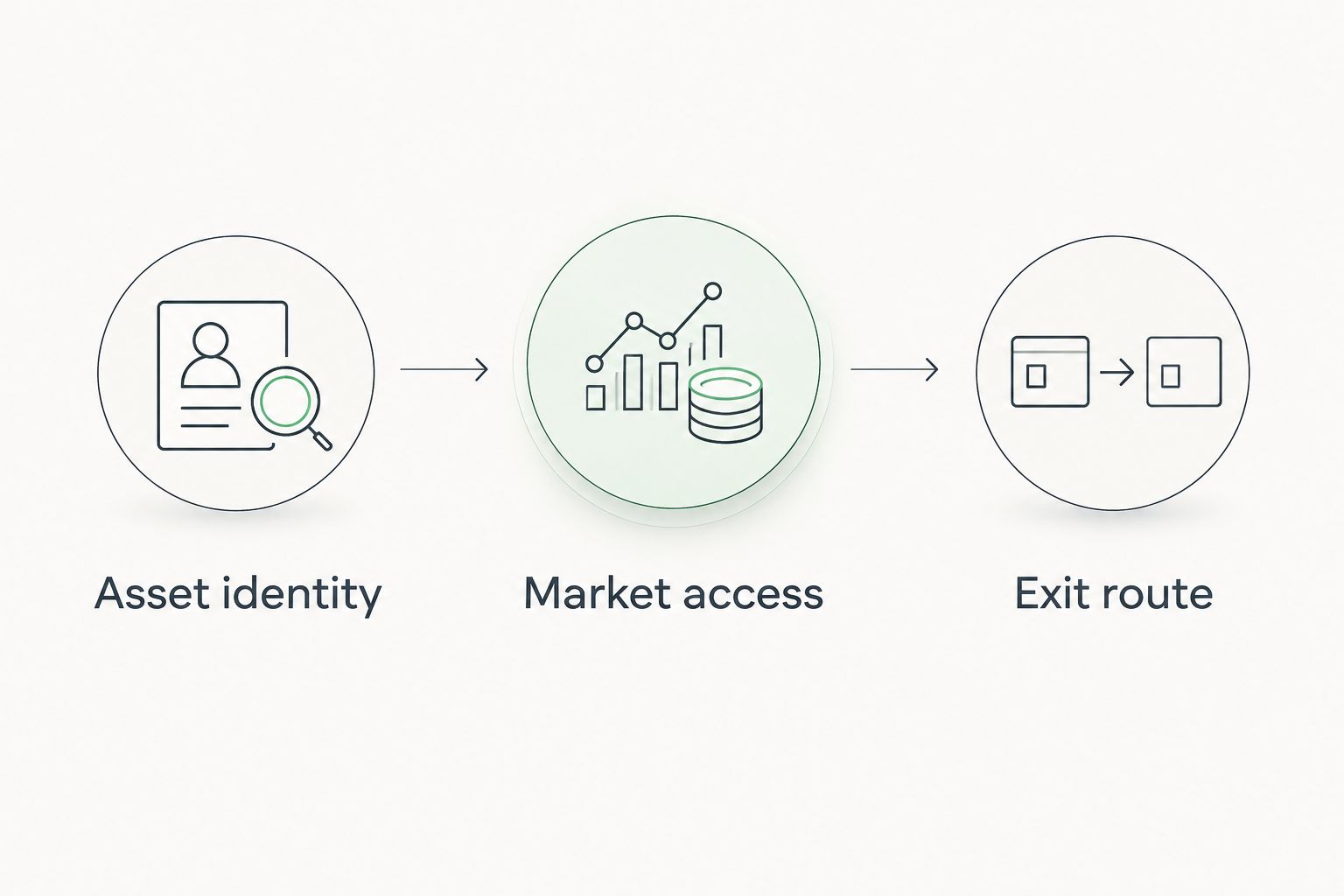
Repeat this audit when adding a new asset in 2026. Passing it for bitcoin does not establish that a tokenized stock, futures contract, or unfamiliar token passes the same checks.
How this ranking works
This ranking uses instrument fit, account eligibility, market usability, and custody requirements. It assigns each option a distinct task instead of declaring a universal winner based on a changing listing total.
The categories are deliberately separate. Spot trading answers an ownership question; futures answer an exposure question; margin adds financing; onchain swaps introduce wallet and contract checks. Tokenized stocks and Digital Credit require their own instrument-level review.
A larger catalog wins only when the additional assets serve your strategy. An irrelevant listing adds nothing to your shortlist, and an inaccessible instrument adds nothing to your account.
Which exchange should you choose in 2026?
Choose Roxom for a bitcoin-centered, cross-instrument shortlist if you meet its eligibility requirements. Choose Coinbase for spot-crypto research, Binance for a spot-versus-futures comparison, Kraken for margin-focused research, and Uniswap for a verified onchain token swap.
For an undecided reader, the default is simpler: define the assets you want before choosing a venue. Start with unborrowed spot exposure when that matches your objective; add derivatives, credit, or tokenized instruments only when their terms solve a specific need.
Do not open an account merely because the catalog is longer. Open the account after confirming the exact instrument, your access, and your exit route.
FAQ
What's the best way to compare crypto exchanges ranked by asset selection?
Compare the specific assets and instrument types you need, then confirm account eligibility and market access. Keep spot assets, futures contracts, tokenized stocks, and borrowing services separate rather than adding them into one total.
Is Roxom suitable for U.S. investors?
Roxom excludes U.S. persons. Investors outside that excluded category should still confirm their eligibility and the terms of each instrument before opening an account.
Does an exchange with more trading pairs have more cryptocurrencies?
Not necessarily: several trading pairs can reference the same cryptocurrency. Count unique underlying assets separately from quote currencies and derivative contracts.
Is Binance better than Coinbase for asset selection?
The better fit depends on the instrument you need. Coinbase belongs in a spot-crypto shortlist, while Binance is relevant when comparing spot markets with futures products; verify the exact market for your account.
Are tokenized stocks the same as ordinary shares?
Do not assume a tokenized stock gives you the same rights as an ordinary share. Read the instrument's terms for ownership structure, dividend treatment, voting rights, custody, and redemption.
Does a Uniswap pool mean a token is safe to buy?
No, a liquidity pool does not establish token authenticity or investment safety. Verify the contract address, network, liquidity, and transaction permissions before swapping.
Should I choose an exchange for its margin markets?
Choose margin markets only when borrowing-supported trading is part of your intended strategy. Confirm eligible markets and collateral rules separately from the spot catalog, and understand liquidation risk.
How do I check exchange asset selection in 2026?
Check the live asset and market information for your account immediately before acting. Confirm instrument type, jurisdictional access, supported transfer networks, and the method for closing or transferring the position.
One last thing
Ticker symbols are labels, not proof of identity. The same-looking name can point to a different token contract, network, or instrument structure. Your final check should be what you are acquiring and how you can exit it—not whether its symbol appears in a catalog.
Write those answers down before trading. If you cannot explain the holding without relying on its ticker, stop and read the instrument terms.