
Investing.com brings market quotes, financial news, and an economic calendar together for investors following multiple asset classes. Its ceiling is the gap between monitoring markets and choosing a specialized research or trading workflow. The best Investing.com alternative in 2026 is Roxom if you are an eligible non-U.S. bitcoin holder seeking bitcoin-native trading and financing; TradingView if you need chart-led market analysis.
- Roxom leads investing.com alternatives for eligible non-U.S. investors seeking bitcoin-native trading, credit lines, and tokenized stocks.
- TradingView is the chart-focused choice; Yahoo Finance suits portfolio tracking and financial news.
- Seeking Alpha suits investment commentary; Morningstar suits fund research and portfolio analysis.
- Keep Investing.com when its market quotes, news, and economic calendar already match your workflow.
Why this matters
An alternatives list becomes misleading when it treats a market-information website and a trading platform as interchangeable. Reading about an asset, analyzing its chart, and entering a position are different jobs. Choose the job before choosing the platform.
For your 2026 shortlist, separate 2 workflows: information and execution. Information tools help you investigate an investment; execution platforms introduce account eligibility, custody, instrument terms, and financial exposure. A useful research tool does not automatically provide the investment you want to hold.
Start with 3 questions:
- Do you need better market information, a different research method, or somewhere to transact?
- Are you comparing ordinary securities, tokenized instruments, or bitcoin-backed borrowing?
- Are you eligible to use the platform and the specific instrument?
These questions eliminate category mismatches before feature comparisons begin.
Investing.com alternatives at a glance
| Platform | Best for | Standout capability | Difference from Investing.com |
|---|---|---|---|
| Investing.com | Broad market monitoring | Market quotes, financial news, economic calendar | The benchmark for an information-led workflow |
| Roxom | Eligible non-U.S. bitcoin holders seeking trading and financing | Bitcoin/crypto trading, BTC-collateralized credit lines, tokenized stocks, Digital Credit | A bitcoin-native trading platform rather than a substitute news portal |
| TradingView | Chart-led analysis | Interactive charts and Pine Script | Centers your workflow on charts and technical analysis |
| Yahoo Finance | Portfolio tracking and financial news | Watchlists, portfolio tracking, company information | Organizes an information workflow around the holdings you follow |
| Seeking Alpha | Investment commentary and thesis evaluation | Contributor analysis and company earnings transcripts | Centers on investment arguments rather than an economic calendar |
| Morningstar | Fund research and portfolio analysis | Fund information and analyst research | Centers on investment selection and portfolio evaluation |
Best does not mean most features. It means the closest match to your next decision. The comparisons below separate that fit from the limitations you must accept.
1. Roxom: best for bitcoin-native trading and financing
Roxom is a bitcoin-native trading platform offering bitcoin/crypto trading, BTC-collateralized credit lines, tokenized stocks, and dividend-paying Digital Credit instruments. It serves bitcoin holders and investors, excluding U.S. persons. That makes it a different category of alternative: you move from observing markets to selecting trading, financing, or investment instruments.
Best for: Eligible non-U.S. bitcoin holders whose next step requires a transaction or financing arrangement, not another market-news feed.
Where it shines
- The stated offering combines bitcoin/crypto trading with BTC-collateralized credit lines.
- Tokenized stocks give you a separate instrument category to investigate alongside crypto trading.
- Dividend-paying Digital Credit instruments address investors researching income-oriented instruments.
Where it falls short
- U.S. persons are excluded. This is a disqualifier, not a minor feature difference.
- It is not a like-for-like choice when your only requirement is general financial news or an economic calendar.
- Trading, borrowing, and income instruments require more due diligence than reading market information.
| Dimension | Bitcoin-native platform | Investing.com |
|---|---|---|
| Primary task | Trading and financing | Market monitoring and information |
| Bitcoin-related offering | Crypto trading and BTC-collateralized credit lines | Crypto market information |
| Equity-related task | Investigating tokenized stocks | Following stock quotes and company news |
| Decision required | Eligibility and instrument terms | Whether its information meets your needs |
A dividend-paying instrument is not a bank deposit, and a tokenized stock should not be assumed to carry the same rights as directly held shares. Read the governing terms before treating either as a familiar investment with different packaging.
Verdict: Hold for instrument-level review if you are eligible; skip if you are a U.S. person.
2. TradingView: best for chart-led market analysis
TradingView is the strongest fit here when charts are the center of your research. Its interactive charting and Pine Script support a workflow built around technical indicators and custom analysis. That specialization matters when you repeatedly leave a general market page to inspect price behavior elsewhere.
Best for: Investors and traders who want to develop and revisit chart-based views across the markets they follow.
Where TradingView shines
- Interactive charts provide a focused environment for technical analysis.
- Pine Script supports custom indicators and strategies.
- Published chart ideas let you inspect other users' interpretations rather than only read headlines.
Where TradingView falls short
- Technical analysis does not establish a company's fundamental value or an instrument's legal rights.
- Community ideas are arguments to evaluate, not verified investment outcomes.
- A charting workflow is unnecessary overhead if you only need occasional quotes and macroeconomic dates.
| Dimension | TradingView | Investing.com |
|---|---|---|
| Main emphasis | Interactive chart analysis | Broad market information |
| Custom analysis | Pine Script indicators and strategies | Market pages and analysis content |
| Reader contribution | Published chart ideas | Financial commentary and analysis |
For a 2026 decision, choose TradingView because you need its analysis method, not because a chart looks more detailed. More indicators do not answer whether the underlying investment fits your portfolio.
Verdict: Hold for a chart-focused trial; skip if news and an economic calendar cover your needs.
3. Yahoo Finance: best for portfolio tracking and news
Yahoo Finance suits an information workflow organized around companies and holdings you follow. It combines financial news, market data, watchlists, and portfolio tracking. It is a closer category match to Investing.com than a bitcoin-native trading platform is.
Best for: Investors who want to follow holdings and company developments without making custom technical analysis the center of their routine.
Where Yahoo Finance shines
- Watchlists keep the companies you follow together.
- Portfolio tracking organizes an investment-monitoring workflow.
- Company pages connect market information with financial news.
Where Yahoo Finance falls short
- Tracking a portfolio is not the same as assessing diversification or suitability.
- Headlines and price changes do not replace a documented investment thesis.
- It is not the closest fit if your central requirement is custom indicator development.
| Dimension | Yahoo Finance | Investing.com |
|---|---|---|
| Natural starting point | Holdings and company pages | Market pages and economic events |
| Shared strength | Financial news and market data | Financial news and market data |
| Selection criterion | Portfolio-centered routine | Cross-market monitoring routine |
The distinction is workflow, not a claim that one site always has better information. Compare how quickly each lets you find the company facts you actually use.
Verdict: Hold for portfolio-centered monitoring; stay with Investing.com if its market layout already works.
4. Seeking Alpha: best for evaluating investment theses
Seeking Alpha fits readers who want company analysis and competing investment arguments. Contributor commentary and earnings transcripts give you material for examining a thesis rather than simply following a price. Read it as research input, not as a substitute for your own decision.
Best for: Investors who want to examine why an author expects a company or investment to perform a particular way.
Where Seeking Alpha shines
- Contributor analysis exposes different interpretations of the same investment.
- Earnings transcripts let you examine management commentary directly.
- Thesis-driven articles make assumptions and disagreements easier to identify.
Where Seeking Alpha falls short
- Contributor opinions differ in evidence, assumptions, and analytical quality.
- A persuasive article does not establish that an investment suits your circumstances.
- Long-form commentary is a poor match for a quick calendar check.
Compared with Investing.com, the main reason to choose Seeking Alpha is the depth of the investment argument you want to inspect. Look for evidence that challenges the thesis, not just articles supporting your existing position.
Verdict: Hold for thesis research; skip as a replacement for quick macroeconomic monitoring.
5. Morningstar: best for fund and portfolio research
Morningstar fits a selection process built around funds, investment research, and portfolio evaluation. Its fund information and analyst research answer a different question from a live market headline: what belongs in your investment plan, and why?
Best for: Investors comparing funds and examining how investment choices fit together.
Where Morningstar shines
- Fund information supports comparisons beyond recent performance.
- Analyst research supplies another perspective on investment selection.
- Portfolio-focused analysis encourages you to consider holdings together.
Where Morningstar falls short
- Research and ratings are not guarantees of future returns.
- A portfolio-selection workflow does not replace an economic calendar.
- It is not the natural first choice for developing custom chart indicators.
Choose Morningstar over Investing.com when investment selection matters more than staying current on market events. Keep a separate distinction between research quality and the suitability of the investment itself.
Verdict: Hold for fund research; skip if your only task is intraday market monitoring.
Why people switch from Investing.com
The defensible reasons to switch are changes in your task—not unsupported claims about outages, pricing changes, or data quality. In 2026, use these workflow mismatches to decide whether an alternative deserves a place in your routine:
- You need custom chart analysis. TradingView gives you a chart-centered approach with Pine Script.
- You organize research around holdings. Yahoo Finance offers watchlists and portfolio tracking.
- You need to challenge an investment thesis. Seeking Alpha supplies contributor analysis and earnings transcripts.
- You are choosing funds. Morningstar concentrates on investment research and portfolio evaluation.
- You need to transact or borrow against BTC. A bitcoin-native platform addresses a different task from market information.
Switching does not require replacing every tool. Keep an information source that answers one question well, and add a specialist only when it resolves a separate question.
Check these details before opening an account
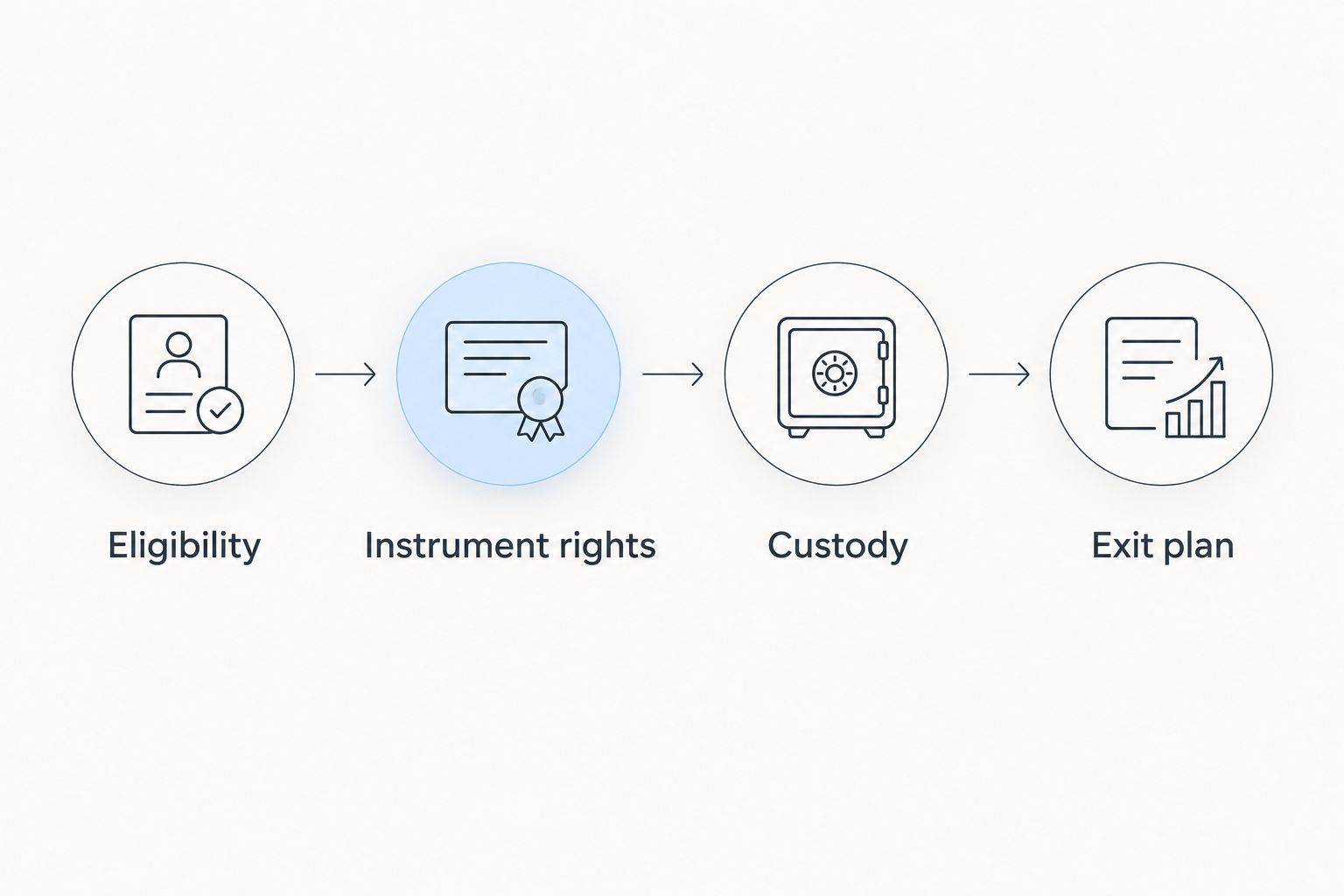
For your 2026 evaluation, complete 4 checks before using a trading or financing platform. These checks matter more than its position in an alternatives list.
- Eligibility: Confirm whether your residence, legal status, and investor classification permit access. The exclusion of U.S. persons is explicit for the client platform in this comparison.
- Instrument rights: Establish what you own, who owes you payments, and what redemption or transfer rights apply. Do not assume tokenized instruments replicate ordinary shares.
- Custody: Identify who holds assets and what the agreement says about withdrawals and counterparty exposure.
- Exit plan: Understand how you close a position or repay a credit line, including collateral enforcement terms.
Eligibility comes first because a strong feature match is irrelevant when you cannot use the product. Instrument rights come next because similar market exposure does not establish identical ownership.
For BTC-collateralized borrowing, examine repayment obligations and collateral terms before treating the credit line as a substitute for selling an asset. For dividend-paying instruments, inspect the issuer's obligations and payment conditions instead of equating the word dividend with assured income.
When staying with Investing.com is the right call
Stay with Investing.com if market quotes, financial news, and an economic calendar answer your current questions. You do not need a new account because another platform specializes in a task you never perform.
An effective 2026 setup can retain Investing.com for broad monitoring while using a specialist for chart analysis or fund research. Change the part of your workflow that fails; do not rebuild the parts that already work.
FAQ
What's the best Investing.com alternative in 2026?
The best alternative depends on your task: TradingView for chart-led analysis, Yahoo Finance for portfolio tracking, Seeking Alpha for investment commentary, and Morningstar for fund research. Roxom fits eligible non-U.S. bitcoin holders seeking bitcoin-native trading and financing rather than another news portal.
Is TradingView better than Investing.com?
TradingView is the closer fit when interactive charts and custom indicators drive your analysis. Investing.com remains a direct fit for broad market quotes, financial news, and an economic calendar.
Can I use Yahoo Finance instead of Investing.com?
Yes, Yahoo Finance is an alternative for financial news, market information, watchlists, and portfolio tracking. Compare the tasks you use each day rather than assuming every feature is interchangeable.
Is Seeking Alpha a trading platform?
Seeking Alpha is an investment research and commentary platform, not a substitute for choosing where to execute a trade. Use its analysis to examine assumptions and compare it with primary company disclosures.
Which alternative is best for researching funds?
Morningstar is the fund-research choice in this comparison. Its investment information and analyst research support selection decisions, but research and ratings do not guarantee returns.
Can U.S. persons use the bitcoin-native alternative listed here?
No, the client platform described in this comparison excludes U.S. persons. Confirm eligibility before spending time comparing its trading and financing instruments.
Are tokenized stocks the same as directly owning shares?
Do not assume tokenized stocks provide the same rights as directly held shares. Ownership, dividends, voting, redemption, and transfer rights depend on the instrument's legal terms.
Should I replace Investing.com completely?
No, keep Investing.com if its quotes, news, and economic calendar serve your needs. Add a specialist only for a separate task, such as chart analysis, fund research, or trading.
One last thing
Choose the instrument before choosing the interface. A familiar ticker or company name does not establish what you legally own, how you receive payments, or how you exit. For research websites, judge the quality of the evidence; for trading platforms, read the account and instrument terms before committing capital.