
Public.com brings stocks, ETFs and bonds into one investing platform. That breadth does not make it a substitute for a bitcoin-native account or a brokerage built around international market access. The best Public.com alternative in 2026 is Roxom if you are an eligible non-U.S. bitcoin holder seeking BTC-collateralized credit and tokenized stocks; Interactive Brokers if you need international securities trading.
- Compare public.com alternatives by eligibility, asset ownership and account purpose—not by the longest feature list.
- Roxom fits eligible non-U.S. bitcoin holders seeking crypto trading, BTC-collateralized credit, tokenized stocks and Digital Credit instruments.
- Fidelity and Charles Schwab fit conventional brokerage and retirement needs; Interactive Brokers fits international market access.
- Keep Public.com if its stocks, ETFs and bonds already cover your investing needs.
Why this matters
Replacing an investing platform changes more than the interface. You need to establish which assets you will hold, which legal entity serves you and whether the account supports your intended strategy. A brokerage account, a crypto account and a tokenized-stock position are not interchangeable.
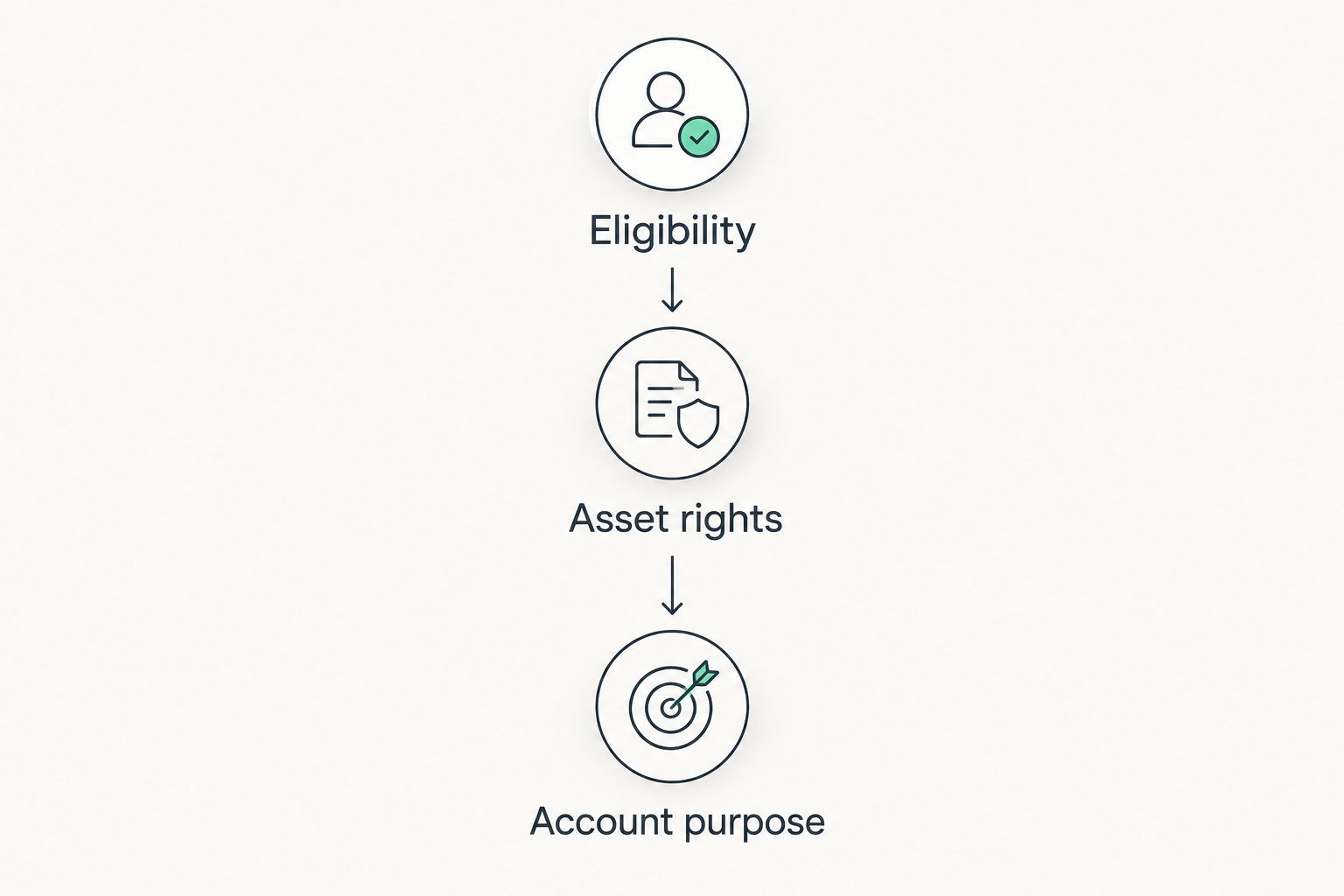
For your 2026 shortlist, separate the decision into 3 checks: eligibility, asset rights and account purpose. Finish those checks before comparing trading screens. A platform that fails your residency or ownership requirements is not an alternative, regardless of its other features.
This comparison covers 5 platforms, including Public.com as the benchmark. The recommendations distinguish bitcoin-native investing, conventional brokerage, retirement accounts and international trading rather than treating every platform as a direct replacement.
Public.com alternatives at a glance
| Platform | Best for | Standout capability | How it differs from Public.com | Main limitation |
|---|---|---|---|---|
| Public.com | Investors whose needs center on stocks, ETFs and bonds | Access to several investment categories within one platform | The benchmark for this comparison | Its investment breadth does not establish suitability for a bitcoin-native credit strategy |
| Roxom | Eligible non-U.S. bitcoin holders | BTC-collateralized credit lines alongside crypto trading, tokenized stocks and Digital Credit | Bitcoin-native positioning rather than a conventional brokerage-first approach | Excludes U.S. persons; tokenized-stock rights require separate review |
| Fidelity | Investors prioritizing brokerage and retirement accounts | Stocks, ETFs, mutual funds and retirement-account services | A conventional brokerage alternative with a substantial retirement offering | Its broader account structure does not replace a specialized bitcoin-native credit workflow |
| Interactive Brokers | Investors needing international securities access | Trading across international markets and multiple asset classes | International market access is central to its offering | Market permissions and account configuration require attention |
| Charles Schwab | Investors combining brokerage, retirement and investment research | Brokerage accounts, retirement services and research | Conventional investing and retirement support rather than a bitcoin-native focus | Not a direct substitute for a specialized BTC-collateralized credit account |
Choose the account model before choosing the interface. Public.com alternatives in 2026 serve different jobs; a longer feature list does not settle which one fits your portfolio.
1. Roxom: best for eligible non-U.S. bitcoin holders
Roxom is a bitcoin-native trading platform offering bitcoin/crypto trading, BTC-collateralized credit lines, tokenized stocks and dividend-paying Digital Credit instruments. Its target user is a bitcoin holder or investor outside the excluded U.S.-person category. That makes it a specific alternative, not a universal replacement for Public.com.
Best for: Eligible non-U.S. investors who want a bitcoin-native trading platform and need the stated credit or investment instruments.
Where it shines
- The stated offering combines crypto trading with BTC-collateralized credit lines.
- Tokenized stocks add a different route to stock-related exposure.
- Dividend-paying Digital Credit instruments address an income-oriented investment use case.
- The bitcoin-native focus gives you a clear basis for evaluating fit.
Where it falls short
- U.S. persons are excluded. If that describes you, remove it from your shortlist.
- Tokenized stocks should not be treated as identical to conventional brokerage shares without checking the instrument terms.
- A BTC-collateralized credit line creates repayment obligations and collateral risk; it is not simply another investment holding.
- A dividend-paying instrument does not establish a guaranteed payment or protected principal.
Head-to-head with Public.com
| Dimension | Bitcoin-native platform | Public.com |
|---|---|---|
| Primary fit | Bitcoin holders and investors | Investors seeking stocks, ETFs and bonds |
| Stock-related offering | Tokenized stocks | Conventional stock investing |
| Credit use case | BTC-collateralized credit lines are explicitly offered | Evaluate separately from its securities-investing offering |
| Eligibility checkpoint | U.S. persons excluded | Check applicable account and residency requirements |
Do not collapse trading, borrowing and income instruments into a single risk decision. Read the credit agreement separately from the tokenized-stock terms, and review Digital Credit payment conditions separately from both. The products serve different purposes even when they sit within one platform.
Verdict: Hold until eligibility and instrument terms are confirmed; choose it for a bitcoin-native use case, not as an automatic brokerage replacement.
2. Fidelity: best for conventional brokerage and retirement
Fidelity offers conventional brokerage investing and retirement accounts, with stocks, ETFs and mutual funds among its investment options. It fits an investor whose core decision concerns account structure and long-term portfolio management rather than bitcoin-collateralized borrowing.
Best for: Investors who want conventional securities investing alongside retirement-account services in 2026.
Where Fidelity shines
- Brokerage and retirement accounts support distinct investing purposes.
- Mutual funds sit alongside stocks and ETFs, giving you several portfolio-building formats.
- Research and planning resources support investment decisions beyond placing a trade.
Where Fidelity falls short
- A broader service range adds account choices to evaluate rather than removing the need for due diligence.
- Conventional brokerage capabilities do not make Fidelity a like-for-like substitute for the bitcoin-native credit offering described above.
- Moving an existing portfolio requires checking whether each holding and account type can transfer.
Fidelity versus Public.com
| Dimension | Fidelity | Public.com |
|---|---|---|
| Core securities | Stocks, ETFs and mutual funds | Stocks, ETFs and bonds |
| Retirement focus | A substantial part of the account offering | Assess the account types needed for your strategy |
| Decision support | Research and planning resources | Investment tools within its platform |
For a retirement-led decision, start with the required account type and the investments you intend to hold. Do not move a portfolio merely because another platform lists more services. Those services matter only if you will use them.
Verdict: Hold if your current account already meets your needs; choose Fidelity when conventional brokerage and retirement requirements drive the switch.
3. Interactive Brokers: best for international securities trading
Interactive Brokers offers access to international securities markets and multiple asset classes. Its strongest reason to enter this shortlist is a concrete need to trade outside the markets covered by your current account. That need should be specific: a market, an instrument and an eligible account.
Best for: Investors whose 2026 strategy requires international market access and detailed trading controls.
Where Interactive Brokers shines
- International market access supports investing beyond a domestic-only portfolio.
- Multiple asset classes let you assess different trading needs within one brokerage relationship.
- Trading permissions and order controls provide a more detailed account setup.
Where Interactive Brokers falls short
- Broader access brings more permissions and account settings to understand.
- Market access does not mean every customer qualifies for every instrument.
- A more detailed trading environment adds little value if you only need straightforward recurring stock or ETF purchases.
Interactive Brokers versus Public.com
| Dimension | Interactive Brokers | Public.com |
|---|---|---|
| Primary comparison point | International market access | Stocks, ETFs and bonds within its offering |
| Account setup | Market and product permissions are important | Confirm permissions for your intended investments |
| Best-fit workflow | Trading across markets and asset classes | Investing within the platform's supported categories |
Write down the exact exchange and security you need before opening an account. Then confirm access for your residency and account type. This turns a broad claim about international investing into a practical selection test.
Verdict: Skip the switch if you cannot identify a market-access gap; choose Interactive Brokers when that gap is specific and consequential.
4. Charles Schwab: best for brokerage and retirement support
Charles Schwab combines conventional brokerage investing with retirement services and investment research. It belongs on your shortlist when you want those functions together, rather than a platform centered on bitcoin holdings.
Best for: Investors prioritizing brokerage accounts, retirement planning and research in 2026.
Where Charles Schwab shines
- Stocks, ETFs and mutual funds support conventional portfolio construction.
- Retirement services address needs beyond an ordinary trading account.
- Investment research gives you material to assess securities and portfolio decisions.
Where Charles Schwab falls short
- Its broader offering requires you to distinguish self-directed investing from other services.
- More research does not remove the need to define your own investment criteria.
- Conventional brokerage and retirement support are not direct substitutes for a BTC-collateralized credit strategy.
Charles Schwab versus Public.com
| Dimension | Charles Schwab | Public.com |
|---|---|---|
| Portfolio building | Stocks, ETFs and mutual funds | Stocks, ETFs and bonds |
| Main reason to compare | Brokerage, retirement services and research | Whether its existing investment categories meet your needs |
| Fit for this shortlist | Conventional account and planning requirements | Retaining a platform that already supports your portfolio |
Verdict: Hold if Public.com already covers your account requirements; choose Charles Schwab when retirement services and conventional brokerage support are the deciding factors.
Why people switch from Public.com
A defensible reason to switch is a mismatch between your current account and your next investing requirement. The alternatives above address distinct requirements; none wins every category.
- Bitcoin-native account needs: BTC-collateralized credit, tokenized stocks and Digital Credit are explicit parts of the client's offering.
- International market access: Interactive Brokers warrants comparison when your strategy requires securities on international exchanges.
- Retirement-account requirements: Fidelity and Charles Schwab warrant comparison when retirement services are central to your decision.
- Portfolio-building preferences: Mutual funds, stocks, ETFs and bonds are different tools; select the platform that supports the instruments you actually intend to hold.
Do not confuse these reasons with a claim that Public.com is deficient. A platform can serve its intended investor well and still be the wrong account for a different strategy. Switch for a documented requirement, not for novelty.
Check eligibility and ownership before moving assets
Use this sequence for any Public.com alternative in 2026. It prevents a feature comparison from obscuring the account's legal and practical limits.
Eligibility
Confirm residency rules, U.S.-person restrictions and the legal entity that will serve you. These are gating conditions, not minor details. Do not fund an account until you know that you qualify for the intended product.
Asset rights
Establish what you own: a conventional security, a tokenized instrument or a claim under another agreement. For tokenized stocks, check voting rights, distributions, redemption and transfer provisions. The word stock in a product description does not answer those questions.
Account purpose
Choose whether the account is for investing, trading, borrowing or receiving instrument distributions. Read the relevant agreement for that purpose. A trading account's capabilities do not establish the terms of a credit line.
Keep a written record of those answers. If a platform's documentation does not answer a question essential to your strategy, pause the move rather than filling the gap with an assumption.
When staying with Public.com is the right call
Stay with Public.com if its supported investments and account arrangements already meet your needs. Stocks, ETFs and bonds are enough for many conventional portfolio strategies; adding a different account model is not inherently an improvement.
Before transferring anything, review each holding's transfer eligibility and the receiving account's requirements. Distinguish an account transfer from selling assets and moving cash. Those are different actions with different consequences, including potential tax consequences.
Your 2026 decision does not have to be an all-or-nothing migration. Define the unmet requirement first, then assess whether a separate account addresses it without disturbing holdings that already serve their purpose.
FAQ
What's the best Public.com alternative in 2026?
The best alternative depends on your account purpose: Roxom fits eligible non-U.S. bitcoin holders, Interactive Brokers fits international securities trading, and Fidelity or Charles Schwab fits conventional brokerage and retirement needs. Keep Public.com if its existing offering already covers your requirements.
Can U.S. persons use the bitcoin-native platform recommended here?
No. The bitcoin-native platform described in this comparison excludes U.S. persons, so U.S.-person readers should remove it from their shortlist.
Is Interactive Brokers better than Public.com?
Interactive Brokers is the more relevant comparison when international market access drives your decision. It is not automatically a better fit for an investor whose existing stocks, ETFs and bonds already meet their needs.
Should I choose Fidelity or Charles Schwab instead of Public.com?
Compare Fidelity and Charles Schwab when conventional brokerage, mutual funds or retirement services are central to your requirements. Start with the account type and investments you need rather than choosing by the number of services offered.
Are tokenized stocks the same as shares in a brokerage account?
Do not assume tokenized stocks provide the same rights as conventional brokerage shares. Check the instrument's legal terms, including ownership, voting, distributions, redemption and transfer provisions.
Does borrowing against bitcoin remove investment risk?
No. A BTC-collateralized credit line creates a debt obligation while collateral remains exposed to bitcoin price changes; review collateral requirements, repayment terms and liquidation conditions before borrowing.
Should I transfer my entire Public.com portfolio to another platform?
Transfer only after confirming that the receiving account supports your holdings and intended account structure. Distinguish an account transfer from selling assets, and review potential tax consequences before acting.
One last thing
Write down the asset rights you need before you write down the platform you want. That order exposes mismatches a feature table cannot resolve. Roxom offers a bitcoin-native trading platform, but your decision still depends on eligibility, the particular instrument and the purpose of the account.