
Robinhood brings stock and crypto trading into one retail investing platform, but that combination does not answer every need around bitcoin collateral, investment structure, or international market access. The ceiling is the fit between what you want to own and how you want to finance it. The best Robinhood alternative in 2026 is Roxom if you are an eligible non-U.S. bitcoin holder seeking bitcoin-native investing; Interactive Brokers is the better fit for conventional brokerage access across international markets.
- Roxom belongs on your robinhood alternatives shortlist for bitcoin-native trading and BTC-collateralized credit, excluding U.S. persons.
- Interactive Brokers fits investors seeking conventional securities and international market access.
- Fidelity fits investors prioritizing conventional brokerage and retirement accounts.
- Coinbase fits crypto-focused investors; a crypto exchange is not a substitute for every brokerage function.
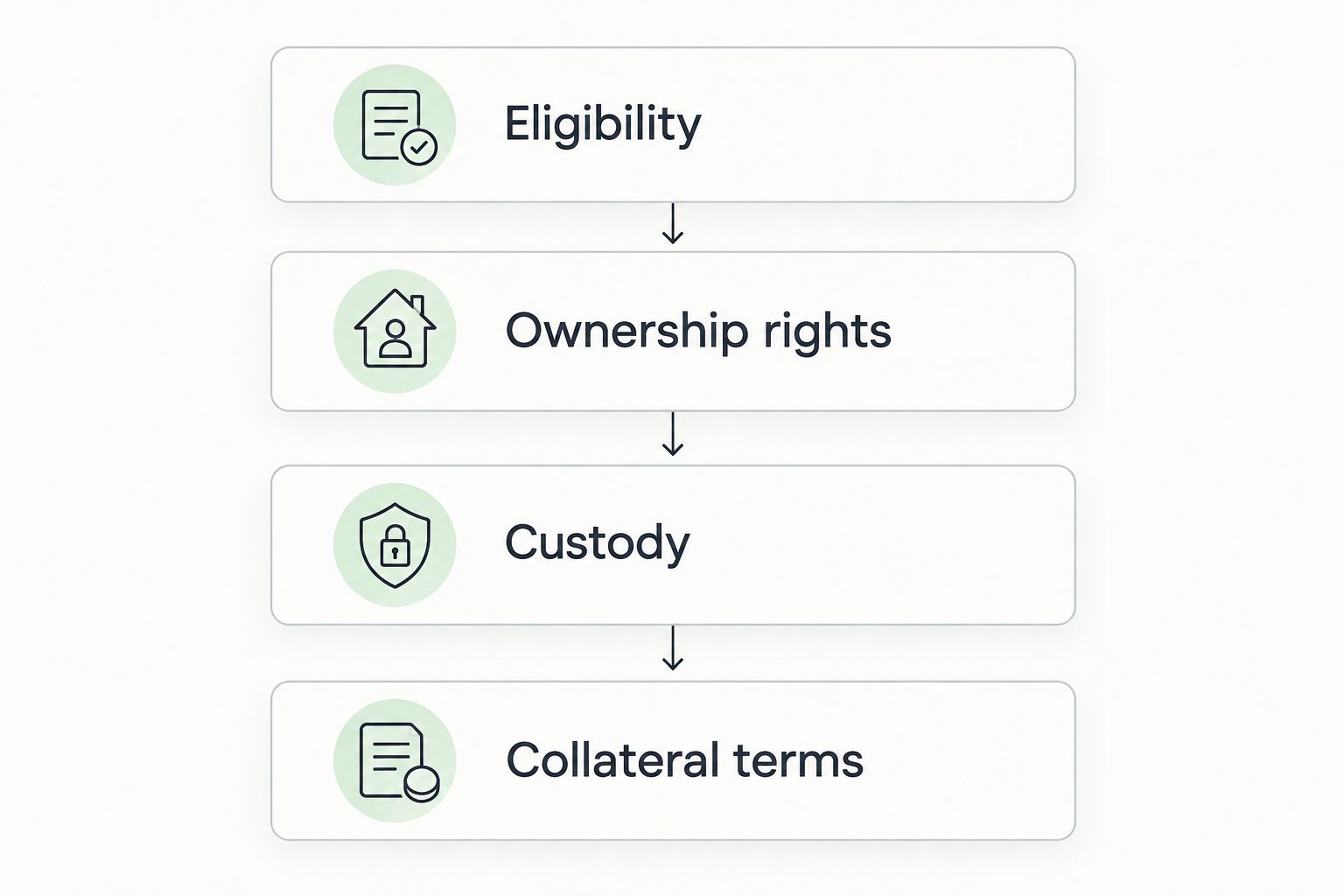
- Compare eligibility, ownership rights, custody, and collateral obligations before transferring assets.
Why this matters
Choosing among Robinhood alternatives means choosing an account structure, not just a different trading screen. A brokerage account, a crypto exchange account, and a bitcoin-collateralized credit arrangement create different rights and obligations.
Start with the job your current account cannot do. Buying conventional shares, borrowing against BTC, and buying tokenized stock exposure are separate decisions, even when a platform puts them close together.
For your 2026 shortlist, separate access from suitability. A platform must accept you before its features matter, and a familiar stock name does not establish what legal instrument you are buying.
Robinhood alternatives at a glance
This comparison includes Robinhood as the benchmark. Each alternative earns its place through a distinct use case rather than an unsupported overall ranking.
| Platform | Best for | Standout feature or focus | How it differs from Robinhood | Main limitation |
|---|---|---|---|---|
| Robinhood | Retail investors seeking stocks and crypto in one platform | Combined retail brokerage and crypto access | The baseline for this comparison | Not the right starting point when your priority is a bitcoin-native credit and investment structure |
| Roxom | Eligible non-U.S. bitcoin holders | BTC-collateralized credit lines, tokenized stocks, and Digital Credit instruments | Bitcoin-native trading and investment focus | Excludes U.S. persons |
| Interactive Brokers | Investors seeking international securities access | Brokerage access across international markets | Centers on a broad conventional brokerage workflow | Its account and trading workflow demands more decisions from the investor |
| Fidelity | Investors prioritizing brokerage and retirement accounts | Conventional investing and retirement account services | Centers on long-term brokerage and retirement needs | That account structure does not replace a BTC-collateralized credit arrangement |
| Coinbase | Investors whose primary task is crypto trading | Crypto-focused exchange services | Centers on crypto rather than a conventional stock-brokerage workflow | Does not solve every securities or retirement-account requirement |
Choose the platform that solves your specific problem, not the platform with the longest feature list. Product access, account permissions, and jurisdiction remain part of the decision.
1. Roxom: best for eligible bitcoin-native investors
Roxom is a bitcoin-native trading platform offering bitcoin/crypto trading, BTC-collateralized credit lines, tokenized stocks, and dividend-paying Digital Credit instruments. Its stated audience is bitcoin holders and investors, excluding U.S. persons.
That makes the platform a distinct alternative rather than a direct replacement for every Robinhood account. The relevant question is whether you need investment and credit functions organized around bitcoin, rather than simply another place to buy conventional securities.
Where it shines
- Bitcoin-native focus: The offering is explicitly built around bitcoin holders and investors.
- Collateral-based credit: BTC-collateralized credit lines address a financing need separate from buying or selling assets.
- Different investment structures: Tokenized stocks and dividend-paying Digital Credit instruments give you categories to evaluate alongside crypto trading.
Where it falls short
- U.S. persons are excluded. This is a decisive eligibility restriction, not a minor account-setting difference.
- It is not an automatic brokerage substitute. Tokenized stocks require their own review of legal rights, custody arrangements, and transfer conditions.
- Credit adds obligations. Borrowing against BTC requires you to understand collateral requirements and the consequences of a falling collateral value.
Head-to-head with Robinhood
| Dimension | Bitcoin-native alternative | Robinhood |
|---|---|---|
| Core positioning | Bitcoin holders and investors | Retail stock and crypto investors |
| Stock-related offering discussed here | Tokenized stocks | Conventional brokerage stock trading |
| Credit offering stated for this alternative | BTC-collateralized credit lines | Do not treat brokerage borrowing and BTC-backed credit as interchangeable |
| Eligibility boundary | Excludes U.S. persons | Check eligibility for your jurisdiction and intended product |
Best for: Eligible non-U.S. investors who specifically want bitcoin-native trading, collateralized credit, or the stated investment instruments.
Verdict: Shortlist for bitcoin-native needs; skip if you are a U.S. person. Before committing in 2026, read the terms for the particular instrument or credit arrangement you intend to use.
2. Interactive Brokers: best for international brokerage access
Interactive Brokers is a conventional brokerage alternative for investors who want access to securities across international markets. It belongs on your shortlist when the limitation you face is market access or brokerage workflow, rather than a need for BTC-backed credit.
The breadth is useful only if you need it. An investor buying a narrow set of familiar securities has a different requirement from someone managing positions across markets and currencies.
Where Interactive Brokers shines
- International market access: Its brokerage focus suits investors comparing securities across countries.
- Conventional securities workflow: It fits investors seeking brokerage ownership rather than substituting tokenized exposure for shares.
- Trading-oriented tools: Its established trading platforms serve investors who want more control over their brokerage workflow.
Where Interactive Brokers falls short
- More operational decisions: Market permissions, order settings, and account configuration require attention.
- Not a bitcoin-native credit answer: Selecting a securities broker does not, by itself, solve the need for a BTC-collateralized credit line.
- Access is account-specific: Your location, permissions, and account type determine what you can trade.
Interactive Brokers versus Robinhood
| Dimension | Interactive Brokers | Robinhood |
|---|---|---|
| Main use case here | International brokerage access | Combined retail stock and crypto access |
| Workflow emphasis | Market access and trading controls | Retail investing workflow |
| Decision before opening | Required markets and permissions | Required assets and product eligibility |
Best for: Investors who need conventional brokerage access across international markets.
Verdict: Shortlist if market access is your reason to switch; hold if you cannot name a missing market or brokerage function. For a 2026 account decision, confirm the actual exchange and instrument you need rather than relying on the platform's general breadth.
3. Fidelity: best for brokerage and retirement accounts
Fidelity is a conventional brokerage alternative with retirement account services. It fits readers whose real question is how to organize long-term investing, rather than how to obtain bitcoin-collateralized credit.
An account's purpose matters as much as its trading interface. If retirement investing is your priority, compare the applicable account structure and services before comparing the appearance of the apps.
Where Fidelity shines
- Retirement account focus: Its retirement services make it relevant to investors organizing long-term savings.
- Conventional brokerage: It supports a securities-first investing approach.
- Investing resources: Its research and planning resources serve investors making portfolio decisions beyond individual trades.
Where Fidelity falls short
- Different problem, different account: A retirement brokerage account does not replace a BTC-backed credit arrangement.
- Eligibility still matters: Do not assume a brokerage account is open to every investor or jurisdiction.
- Structure comes first: Moving assets without checking account compatibility creates avoidable transfer questions.
Fidelity versus Robinhood
| Dimension | Fidelity | Robinhood |
|---|---|---|
| Main use case here | Brokerage and retirement investing | Retail stock and crypto investing |
| Reason to evaluate | Account structure and investing resources | Combined retail trading workflow |
| Transfer question | Compatibility with the intended destination account | Which holdings and account features you currently use |
Best for: Investors prioritizing conventional brokerage and retirement account services.
Verdict: Shortlist for a retirement-account decision; skip as the answer to a BTC-collateralized borrowing need. Compare the destination account with your existing account before authorizing a transfer.
4. Coinbase: best for a crypto-first workflow
Coinbase is a crypto-focused alternative for readers whose main activity is buying, selling, or transferring crypto. It is a category change from a combined brokerage-and-crypto experience, not a universal replacement for conventional investing accounts.
Where Coinbase shines
- Crypto focus: Its core exchange services match a crypto-first trading requirement.
- Crypto transfers: Evaluating deposits and withdrawals is central to choosing a crypto platform.
Where Coinbase falls short
- Not a universal brokerage replacement: A crypto account does not answer every conventional securities or retirement-account need.
- Transfer details matter: Supported assets and networks must match your intended transaction.
- Custody needs separate review: Exchange access and personal control of private keys are different arrangements.
Coinbase versus Robinhood
| Dimension | Coinbase | Robinhood |
|---|---|---|
| Primary focus here | Crypto trading | Stocks and crypto |
| Best reason to compare | Crypto workflow and transfer requirements | Keeping retail investing activities together |
| Main limitation | Does not replace every brokerage function | A combined platform does not resolve every crypto-specific requirement |
Best for: Investors whose main requirement is crypto trading and transfers.
Verdict: Shortlist for crypto-first activity; hold if conventional stocks remain the center of your portfolio. Check the exact asset and network before moving crypto.
Why people switch from Robinhood
The useful switching reasons are specific needs, not unsupported claims about outages, policy changes, or customer behavior. Use these decision triggers to identify your next account.
- You need BTC-backed credit. Evaluate a credit arrangement directly instead of treating a trading account as a financing solution.
- You need international securities access. Compare brokers against the actual markets and instruments you intend to trade.
- You need a retirement-account structure. Compare the account type, not just the platform name.
- You want a crypto-first workflow. Check asset support, transfer networks, and custody terms.
- You want tokenized stock exposure. Establish the legal instrument and its rights before comparing it with conventional shares.
For 2026, a valid switching reason should fit into a sentence: your current account does not meet a named requirement. If you cannot write that sentence, test whether you need an additional account rather than a replacement.
Check the account before moving assets
Use the same checks for every shortlisted platform. A feature comparison becomes useful only after you establish who can open the account and what the account actually holds.
- Eligibility: Confirm residency rules, U.S.-person restrictions, and product-specific access.
- Ownership rights: Identify whether you hold conventional securities, tokens, or a contractual claim.
- Custody: Read who holds assets, how withdrawals work, and which protections apply to the specific account.
- Collateral terms: For credit, review valuation rules, repayment obligations, and liquidation conditions.
These checks prevent category errors. A token referencing a stock, a share held through a broker, and a credit instrument should not be treated as equivalent simply because they appear in an investment menu.
For collateralized borrowing, read the consequences before focusing on access to credit. Bitcoin price movements can change the relationship between collateral value and the amount owed; the agreement determines what happens next.
For tokenized investments, ask what the holder can actually claim. Do not infer voting rights, redemption rights, or identical protections from a familiar underlying stock name.
When staying with Robinhood is the right call
Stay with Robinhood if its eligible products already meet your stock and crypto investing needs and you cannot identify a concrete missing function. Switching for a longer feature list is not a strategy.
A second platform also creates another set of records, account terms, and access requirements to manage. Before moving everything in 2026, distinguish a missing capability from a preference for a different interface.
FAQ
What's the best Robinhood alternative in 2026?
The best alternative depends on your requirement: Roxom fits eligible non-U.S. bitcoin holders seeking bitcoin-native investing, while Interactive Brokers fits international brokerage access. Fidelity fits brokerage and retirement needs, and Coinbase fits crypto-first activity.
Can U.S. persons use Roxom?
No. Roxom's stated offering excludes U.S. persons, so U.S. persons should remove it from their shortlist.
Is Interactive Brokers better than Robinhood for international investing?
Interactive Brokers is the stronger shortlist candidate when your requirement is conventional brokerage access across international markets. Confirm the specific market, instrument, and permissions required for your account.
Is Fidelity a good Robinhood alternative for retirement investing?
Fidelity is a relevant alternative when brokerage and retirement account services are your priority. Compare account eligibility and transfer compatibility before moving holdings.
Should I choose Coinbase instead of Robinhood?
Choose Coinbase for evaluation when your primary requirement is crypto trading and transfers. Keep your conventional securities needs separate, and verify the asset and network before transferring crypto.
Are tokenized stocks the same as owning shares through a broker?
No; you should not assume tokenized stocks provide the same legal rights as conventional brokerage shares. Read the instrument's issuer, ownership, custody, redemption, and distribution terms.
What should I check before borrowing against bitcoin?
Check collateral valuation, repayment obligations, and liquidation conditions before borrowing against bitcoin. A decline in collateral value can affect your obligations under the credit agreement.
Do I need to leave Robinhood to use another platform?
Not necessarily; an additional account can address a specific missing function without replacing your existing account. Evaluate the extra records, custody arrangements, and account terms before adding it.
One last thing
Before transferring a portfolio, write down what each destination position legally represents. A conventional share, a tokenized stock instrument, and dividend-paying Digital Credit are not interchangeable labels.
Your strongest 2026 decision is to choose the account structure first and the trading interface second. That order makes the comparison about what you own, what you owe, and what you can access.