
Choose Roxom if you are an eligible non-U.S. bitcoin holder seeking BTC-collateralized credit, tokenized stocks, or Digital Credit instruments; choose Public.com if you want a U.S. brokerage account for conventional stock and ETF investing. In 2026, the decisive difference is bitcoin-native finance versus brokerage-based investing—not which platform has the longer feature list.
- Roxom vs Public.com comes down to bitcoin-native finance versus conventional brokerage investing.
- Roxom is best for eligible non-U.S. bitcoin holders seeking BTC-collateralized credit and tokenized stocks.
- Public.com is best for U.S. investors seeking conventional stocks and ETFs through a brokerage account.
- Compare asset rights, collateral terms, custody, and total costs before choosing either platform.
Why this matters
A stock position, a tokenized stock instrument, and a bitcoin-backed credit line solve different problems. Treating them as interchangeable creates the wrong comparison before you place your first order.
Choose the account structure first, then compare the tools. A platform can match your investment interests and still be unsuitable because of eligibility, ownership rights, or borrowing conditions. This 2026 comparison separates those decisions so you can identify the right platform without confusing trading, investing, and financing.
Start with 3 questions: Can you open the account? What exactly will you own? Are you investing capital or borrowing against collateral? Those answers matter more than a familiar ticker or an attractive income label.
At a glance
| Dimension | Roxom | Public.com |
|---|---|---|
| Best for | Eligible non-U.S. bitcoin holders seeking bitcoin-native trading and financing | U.S. investors seeking conventional brokerage investing |
| Eligibility | Excludes U.S. persons | U.S.-focused brokerage; check current account requirements |
| Stock exposure | Tokenized stocks; examine the instrument's legal rights | Conventional stocks and ETFs through a brokerage account |
| Bitcoin-backed credit | BTC-collateralized credit lines are part of the stated offering | Evaluate brokerage investing separately from bitcoin-backed financing |
| Income instruments | Dividend-paying Digital Credit instruments | Conventional dividend-paying securities and fixed-income investing |
| Custody and protection | Examine bitcoin, tokenized-asset, and collateral custody separately | Examine brokerage custody and security-specific protections |
| Pricing model | Assess trading costs separately from credit-line terms | Assess brokerage transaction costs and applicable account or service charges |
| Standout feature | Combines bitcoin trading, BTC-backed credit, and tokenized investments | Conventional brokerage structure for stock and ETF investing |
The table is a use-case comparison, not a promise that similarly named assets carry identical rights. For each instrument, the governing agreement determines your claim, your exit route, and what happens if an issuer or intermediary fails.
Roxom wins for a bitcoin-centered financial workflow
Roxom is the bitcoin-native trading platform for eligible non-U.S. holders who want trading, BTC-collateralized credit, and tokenized investments. Its stated offering brings those activities into the same platform proposition. That is the clearest reason to consider it rather than a conventional brokerage.
The benefit is relevance to your existing bitcoin position. You are comparing tools designed around holding and using BTC, rather than starting with a stock portfolio and treating bitcoin as a separate allocation.
The tradeoff is complexity. Trading bitcoin, pledging bitcoin as collateral, and buying a tokenized instrument involve different agreements and risks. A shared platform does not turn them into the same product or give them the same protections.
Public.com is the better fit when your starting point is a conventional investment portfolio. If your main task is buying stocks and ETFs, the brokerage structure matches that task more directly. You do not need bitcoin-backed financing merely because you also hold bitcoin elsewhere.
Public.com wins for the U.S. brokerage use case
Eligibility settles this comparison before features do. The bitcoin-native platform excludes U.S. persons, so a U.S. investor should not treat it as an interchangeable alternative to a domestic brokerage.
Public.com belongs on the shortlist for investors seeking a U.S. brokerage account. Check its current application requirements against your residence, tax status, and account needs before beginning a transfer.
Do not equate physical location with eligibility. U.S.-person status is not simply a question of where you happen to be when opening an account. Follow the platform's actual eligibility definitions rather than assuming travel or an overseas address changes the answer.
For a 2026 decision, complete this check first. An appealing instrument or borrowing feature has no practical value if the account rules exclude you. Conversely, being a non-U.S. investor does not automatically establish eligibility for every jurisdiction or product.
Public.com wins when conventional stock ownership is the goal
Public.com is the more direct choice when you want conventional stocks and ETFs through a brokerage account. That account structure is different from buying tokenized stock exposure, even when both instruments reference the same company.
A familiar company name does not establish identical ownership rights. A tokenized instrument's documentation determines whether you have a claim on underlying shares, an issuer, or another contractual arrangement. Do not infer voting rights, transfer rights, or corporate-action treatment from the ticker alone.
For tokenized stocks, examine:
- The legal issuer and the entity responsible for the underlying exposure.
- Your rights to distributions and the treatment of corporate actions.
- Any redemption or transfer mechanism.
- The process if the issuer, custodian, or trading venue fails.
For a brokerage position, examine the account agreement and the treatment of the specific security. Conventional brokerage custody is not the same as holding a share certificate directly, but it provides a familiar securities-account framework.
Tokenized exposure fits a different objective: accessing stock-linked investments within a bitcoin-native platform. Choose it deliberately for that structure—not because tokenization sounds like an automatic improvement over brokerage ownership.
Roxom wins when BTC-collateralized credit is the requirement
Roxom offers BTC-collateralized credit lines, making it the relevant option here when your problem is obtaining credit against bitcoin. This is a financing decision, not simply another way to buy investments.
Pledging BTC introduces obligations that holding BTC outright does not. You owe under the credit agreement while the collateral's market value can change. The agreement determines collateral requirements, repayment obligations, and the lender's rights when those requirements are breached.
Before borrowing, read the provisions covering:
- How collateral is valued and when that valuation changes.
- When additional collateral or repayment is required.
- What triggers liquidation and how liquidation works.
- Who controls the pledged bitcoin.
- What happens during withdrawal restrictions or a service interruption.
The advantage is access to a financing route built around BTC collateral. The disadvantage is that falling collateral value can force action when you would otherwise prefer to keep holding.
Public.com remains the better choice for conventional brokerage investing, but that does not make it the default answer to a bitcoin-backed borrowing requirement. Keep the decisions separate. Compare a credit agreement with another credit agreement, rather than comparing a loan with an ordinary investment account.
Neither platform wins income without examining the instrument
The bitcoin-native platform offers dividend-paying Digital Credit instruments. Public.com supports conventional income-oriented investing through securities such as dividend-paying stocks and fixed-income investments. Those categories do not establish equal payment obligations or equal risk.
An income label is not a capital guarantee. A dividend-paying instrument still requires an assessment of the issuer, payment conditions, asset structure, and potential loss of principal.
For Digital Credit, read the instrument's documents to establish what creates the payment obligation and what can interrupt it. For a conventional dividend-paying stock, understand that dividends are not guaranteed and that the share price can fall. Fixed-income instruments require their own assessment of credit risk, interest-rate exposure, and maturity terms.
Neither platform wins this dimension from a product label alone. The better fit is the one whose specific instrument matches your income objective and whose risks you can explain without relying on the advertised payout.
In 2026, compare the legal payment source before comparing the payment amount. An issuer obligation, a corporate dividend, and a distribution from an investment vehicle are different claims—even when each produces cash flow.
Neither platform wins custody from the platform name alone
Custody deserves its own decision. Brokerage securities, cryptoassets, pledged collateral, and tokenized instruments can sit within different legal and operational arrangements.
For either platform, identify the legal entity holding or controlling each asset. Then establish whether you can transfer the position, withdraw the asset, or only sell it through the platform. Those are different exit routes.
Keep 2 records for each position: the account or instrument agreement, and the current custody disclosure. Save them before committing funds so your understanding does not depend on a short product description.
SIPC protection, where applicable to a qualifying brokerage account, does not insure investment performance or prevent market losses. Do not extend a securities-account protection to cryptoassets or tokenized instruments without an explicit basis in the relevant disclosures.
This dimension is an honest tie on the comparison alone. Public.com's brokerage structure and the bitcoin-native platform's product range tell you where to investigate; they do not justify a blanket statement that every asset on either platform has the same protection.
Pricing: separate investing costs from borrowing costs
Compare total costs by activity, not by a single headline fee. Trading and borrowing have different cost structures, so one platform-wide number would conceal the decision you actually need to make.
For bitcoin or tokenized-asset trading, review the applicable execution charges, spread, conversion costs, and transfer costs. Include only charges that the current terms actually apply to your intended transaction. A narrow trading-cost comparison is incomplete if funding or exiting the position adds another expense.
For BTC-collateralized credit, review the interest calculation and any contractual charges alongside collateral and repayment requirements. Flexible access to credit is not the same as predictable borrowing expense. Your expected holding period and repayment plan belong in that assessment.
For Public.com, review the current brokerage schedule for the asset and service you intend to use. Stock transactions, fixed-income transactions, account transfers, and optional services should not be assumed to share identical terms.
Neither platform receives a pricing win here. Make a 2026 comparison using the same intended activity, funding route, holding period, and exit route. That creates a decision you can use; comparing unrelated transactions does not.
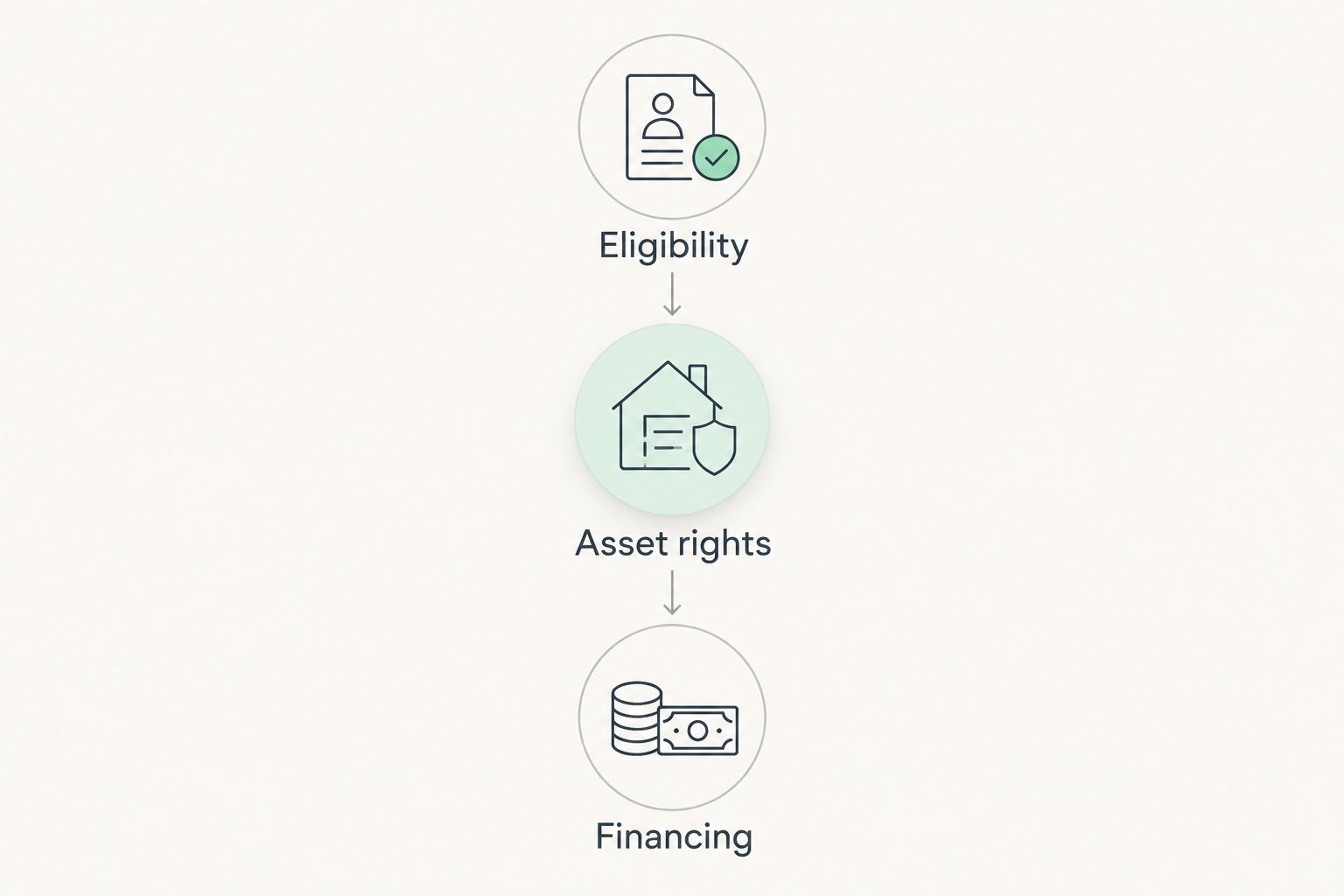
Make the decision in this order
Use these 3 steps before opening or funding an account. Each resolves a different source of mismatch.
- Eligibility: Confirm that your legal and tax status meets the account and product requirements.
- Asset rights: Identify what you own, who owes you an obligation, and how you exit.
- Financing: If borrowing, understand collateral control, repayment, and liquidation before drawing credit.
This order prevents you from spending time comparing tools for an account you cannot use or an instrument you do not want. It also keeps a financing decision from being disguised as an investment decision.
Final verdict: choose the structure that matches your job
Choose Roxom if you are an eligible non-U.S. bitcoin holder
Choose Roxom for bitcoin-native trading and financing when BTC-collateralized credit, tokenized stocks, or Digital Credit instruments are central to your plan. Accept the additional work of evaluating collateral rules and instrument-specific legal rights.
Do not choose it merely to replicate a conventional brokerage account. Its stated proposition is different, and U.S. persons are excluded.
Choose Public.com if you are a U.S. brokerage investor
Choose Public.com for conventional stock and ETF investing when you want a brokerage account rather than a bitcoin-centered financing workflow. Its advantage in this comparison is the fit between that account structure and your investment task.
Do not assume a brokerage account answers a separate need for BTC-collateralized borrowing. Evaluate that financing requirement independently.
| Dimension | Winner |
|---|---|
| Bitcoin-centered workflow | Bitcoin-native platform |
| U.S. brokerage use case | Public.com |
| Conventional stock ownership | Public.com |
| BTC-collateralized credit requirement | Bitcoin-native platform |
| Income suitability | Instrument-specific; no blanket winner |
| Custody and protection | Account-specific; no blanket winner |
| Total cost | Transaction-specific; no blanket winner |
| Standout feature | Bitcoin financing versus conventional brokerage investing |
FAQ
Which is better in 2026, Roxom or Public.com?
Roxom is the better fit for eligible non-U.S. bitcoin holders seeking bitcoin-native trading and BTC-collateralized credit; Public.com is the better fit for U.S. investors seeking conventional brokerage investing. Choose according to eligibility and account structure, not the number of features.
Can U.S. persons use the bitcoin-native platform?
The platform excludes U.S. persons. Check the account's eligibility definitions rather than assuming that an overseas address or travel changes your status.
Are tokenized stocks the same as stocks in a brokerage account?
Tokenized stocks and brokerage-held stocks are not automatically the same legal instrument. Read the token's governing documents for ownership, distributions, redemption, and insolvency rights.
Is borrowing against bitcoin the same as selling bitcoin?
Borrowing against bitcoin creates a debt obligation secured by collateral; selling bitcoin disposes of the asset. A collateralized loan also introduces repayment requirements and potential liquidation under its agreement.
Are Digital Credit dividends guaranteed?
Do not treat a dividend-paying label as a guarantee. The instrument's documents determine payment obligations, payment conditions, and the risks to your invested capital.
How should I compare platform costs?
Compare costs for the same activity and exit route. Separate trading charges and conversion costs from credit interest, contractual borrowing charges, and collateral requirements.
Does brokerage protection cover investment losses?
SIPC protection does not cover losses caused by falling investment values. Establish which account and assets qualify for any stated protection rather than assuming that it extends to cryptoassets or tokenized instruments.
One last thing
Before funding either platform, write one sentence explaining your exit: sell the security, transfer the position, redeem the instrument, or repay the credit line and release collateral. If you cannot identify which action applies, return to the agreement.
That small check exposes a large difference. A familiar asset name tells you what an investment references; the exit terms tell you how you recover control of your capital.