
Choose Roxom if you are a non-U.S. bitcoin holder seeking trading, BTC-collateralized credit, or investment instruments; choose Stocktwits if you want ticker-based investor discussion and sentiment. This 2026 comparison separates the platform where you act from the community where you gather ideas.
- Roxom vs Stocktwits is a trading-platform versus investor-community comparison, not a contest between interchangeable tools.
- Roxom serves non-U.S. bitcoin holders seeking crypto trading, BTC-backed credit, tokenized stocks, and Digital Credit instruments.
- Stocktwits wins for ticker-based discussion and investor sentiment, not for replacing investment due diligence.
- Neither a popular market opinion nor a dividend-paying instrument removes investment risk.
Why this matters
Buying an investment and reading opinions about it are different jobs. A discussion feed helps you discover a thesis. A trading platform lets you take financial exposure, subject to its terms and your eligibility. Confusing those jobs creates a poor comparison before you even open an account.
For eligible bitcoin holders, Roxom is a bitcoin-native trading platform with crypto trading, BTC-collateralized credit lines, tokenized stocks, and dividend-paying Digital Credit instruments. Stocktwits is an investor community organized around market symbols and conversations. Its value is seeing what people are discussing, then deciding which claims deserve investigation.
Your first decision in 2026 is therefore not which interface you prefer. It is whether you need to transact, borrow against bitcoin, investigate an instrument, or follow investor discussion. Match the platform to that task before comparing secondary features.
At a glance
| Dimension | Roxom | Stocktwits |
|---|---|---|
| Best for | Non-U.S. bitcoin holders seeking financial products | Investors seeking market discussion and sentiment |
| Trading and exposure | Bitcoin/crypto trading and tokenized stocks | Discussion around stocks, crypto, and other market symbols |
| Standout feature | BTC-collateralized credit alongside investment instruments | Ticker-centered investor conversations |
| Borrowing | BTC-collateralized credit lines | Community discussion rather than a substitute for credit terms |
| Income instruments | Dividend-paying Digital Credit instruments | Discussion and idea discovery rather than instrument documentation |
| Research verification | Instrument terms require independent review | Community claims require independent verification |
| Risk and suitability | Financial exposure, collateral obligations, and eligibility matter | Information quality and suitability of shared ideas matter |
| Pricing model | Evaluate trading, instrument, and borrowing terms | Evaluate community access and any paid subscription terms |
The table describes the decision axis, not equivalent product menus. A social conversation about an asset does not establish that you can buy that asset through the conversation platform. Likewise, access to an investment instrument does not establish that its terms fit your objectives.
Bitcoin-native trading wins when you need financial exposure
Roxom is the better fit for non-U.S. bitcoin holders seeking trading and BTC-collateralized credit. That is a product-purpose verdict, not a claim about execution quality, returns, or the safety of any particular instrument.
The distinction matters when you already know the action you want to take. Buying or selling crypto, evaluating tokenized stock exposure, and arranging a bitcoin-backed credit line require financial products with defined terms. A stream of market commentary cannot substitute for those terms.
The advantage is direct relevance to the bitcoin-holder use case. The limitation is equally important: a relevant product still needs a suitability review. You must understand what you hold, how you exit, what obligations you accept, and which jurisdictional restrictions apply.
Stocktwits serves a different stage of the process. It helps you observe conversations about a symbol or investment idea. That is useful before a decision, but the decision itself needs an execution venue and a clear understanding of the product.
For your 2026 shortlist, ask a concrete question: do you need somewhere to discuss a position, or somewhere to establish one? Do not score a community as though it were a credit facility, or a trading platform as though its main purpose were public debate.
Stocktwits wins for ticker-based discussion
Stocktwits is the better choice when your primary task is following investor conversations. Its ticker-centered structure lets you read views associated with market symbols rather than treating every post as a disconnected opinion.
That format suits an investor who wants to identify competing narratives. You can look for disagreement about earnings, valuation, price action, or a crypto thesis, then turn the useful claims into research questions. Bullish and bearish sentiment expresses a view; it does not prove the view is correct.
The benefit is access to discussion. The drawback is that confidence, repetition, and popularity are not evidence. A persuasive post can omit a material risk or discuss an asset with different terms from the instrument you intend to buy.
Use community commentary to ask better questions, not to outsource the answers. If a post claims that an investment offers income, investigate the issuer and distribution terms. If it predicts a price move, identify the assumptions and the condition that would invalidate the prediction.
A bitcoin-native financial platform wins on product access for its stated use cases. Stocktwits wins on the social task. Neither advantage makes the other function unnecessary.
BTC-collateralized credit wins for borrowing against bitcoin
A BTC-collateralized credit line addresses a financing need. You pledge bitcoin as collateral and take on borrowing obligations under the agreement. That is fundamentally different from discussing whether bitcoin will rise or fall.
Choose the credit product only after reviewing the collateral rules. Read how collateral is valued, what happens when its value falls, and which actions the lender can take. Also understand repayment obligations and the conditions for recovering pledged collateral.
The attraction is the ability to pursue financing secured by bitcoin rather than treating a market discussion as financial access. The tradeoff is that retaining exposure to bitcoin does not remove the obligations attached to the loan. Falling collateral value and a repayment requirement can matter at the same time.
Stocktwits can supply opinions about borrowing strategies, but another user's strategy is not your agreement. A post cannot tell you the enforceable terms of your own credit line or determine whether your financial circumstances can support it.
Before borrowing in 2026, write down the reason for the loan and the source of repayment. If repayment depends entirely on bitcoin appreciating, identify that dependency explicitly. A credit decision needs a repayment plan, not just a market thesis.
Digital Credit wins for evaluating an income instrument
Dividend-paying Digital Credit instruments belong in an investment comparison, not a sentiment comparison. Their relevance is the instrument itself: you are evaluating a financial claim and its distribution terms rather than merely reading a view about income investing.
A dividend-paying instrument is not a promise of a risk-free return. Review the issuer, the legal claim, distribution conditions, redemption or exit provisions, and the risks described in the documentation. Do not infer those details from the word dividend.
The product advantage is access to the stated instrument category. The limitation is the work needed to understand it. An income objective does not eliminate issuer risk, changes in value, or the consequences of an unsuitable holding period.
Stocktwits is useful for discovering questions other investors are asking about income strategies. Its limitation is that community shorthand often compresses distinctions that matter. A conventional share, a tokenized stock, and a credit instrument should not be treated as identical because their discussions use similar language.
Separate the questions of what you own and what you expect to receive. Then confirm both against the instrument's terms. That keeps the investment decision grounded in the financial product rather than its most appealing description.
Both require verification before you trust a claim
Neither product access nor community agreement replaces primary-source research. This is an honest tie: your responsibility to verify the investment remains the same, even though the material you are checking differs.
For a financial product, inspect the instrument documentation and account terms. For a social post, trace the assertion back to a filing, issuer announcement, or other relevant primary source. A screenshot without context is not enough to establish the claim.
Keep three checkpoints distinct:
- Product terms: What rights, obligations, and restrictions attach to the instrument?
- Source evidence: What supports the investment thesis or factual assertion?
- Personal fit: Does the exposure match your objective and ability to absorb loss?
These checkpoints stop a common reasoning error: treating a sound thesis as proof that every instrument associated with that thesis is suitable. You can agree with an outlook and still reject the proposed way to express it.
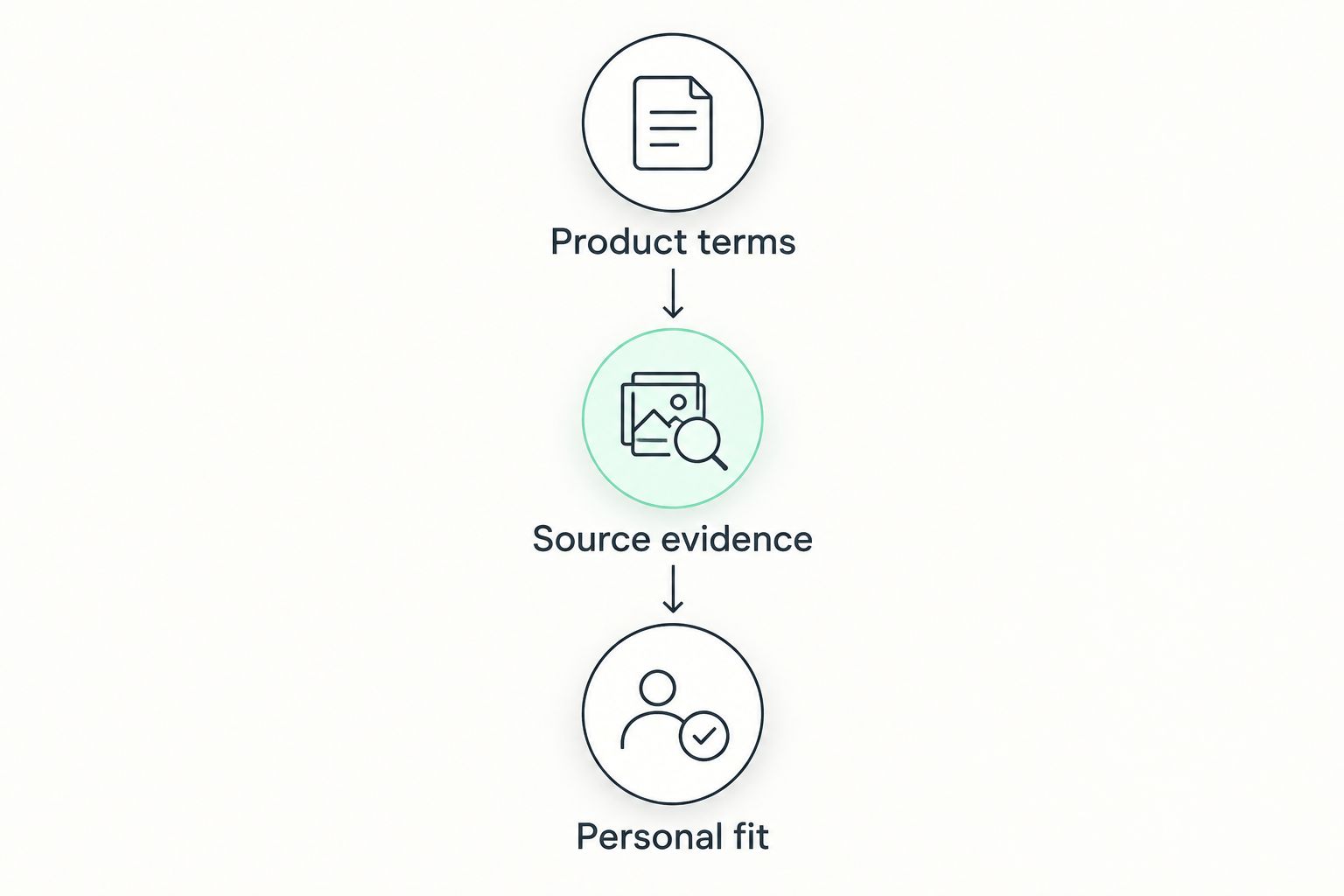
In 2026, make this review part of the decision rather than an afterthought. Read the terms before committing funds, and preserve the source behind any claim that materially affects your choice. If the evidence changes, revisit the decision.
Neither removes risk or the need to check eligibility
Both sides deserve a clear limitation. The bitcoin-native platform involves financial products that require an understanding of exposure and obligations. Stocktwits involves user-generated discussion that requires judgment about evidence and incentives.
Eligibility is a separate issue from preference. Roxom excludes U.S. persons. If that restriction applies to you, the platform is not a trading or borrowing choice for you, regardless of whether its product categories match your interests.
Do not read that restriction as a blanket recommendation of Stocktwits for financial execution. A community can help you research an idea without being the place where you should implement it. Choose an appropriate financial provider separately and check that provider's terms.
For eligible users, suitability still comes before convenience. Consider whether you understand the instrument well enough to explain its downside without referring to promotional language or a popular post. If you cannot, continue the research before taking exposure.
This is the second tie in the comparison: neither side makes a risky decision safe simply by making information or products accessible. The risks differ, but responsibility for the decision remains yours.
Pricing: compare transaction terms with access terms
The meaningful cost comparison is between financial activity and information access. Trading, holding an instrument, and borrowing create different cost questions from reading a community or choosing a paid subscription.
For the bitcoin-native platform, review the current terms associated with the specific action you intend to take. Check transaction-related charges, any applicable account or transfer charges, instrument conditions, and borrowing obligations. Do not assume a credit line has the same cost structure as a trade.
For Stocktwits, assess the access level you actually need and the terms of any paid offering you consider. A subscription decision should turn on the information or community function you will use, not on an expectation that paying makes a market opinion correct.
Predictability and flexibility matter differently here. A recurring subscription commitment is an access decision; transaction-linked charges depend on activity; borrowing costs belong in a repayment assessment. Compare those structures against your intended behavior rather than looking for one headline figure.
For a 2026 decision, check current terms directly before committing. The right question is not which category sounds cheaper. It is whether the total obligations attached to your intended use are acceptable.
Final verdict: choose the platform that matches the job
Choose Roxom if you are an eligible bitcoin holder
Best for: non-U.S. bitcoin holders seeking financial products rather than investor discussion. You want bitcoin/crypto trading, BTC-collateralized credit, tokenized stocks, or Digital Credit instruments, and you are prepared to evaluate the relevant terms.
The named winner for that profile is the bitcoin-native platform. Its stated product categories match the action you want to take. The restriction is clear: U.S. persons are excluded, and eligibility does not replace suitability.
Choose Stocktwits if you are researching market conversations
Best for: investors who want ticker-based discussion and contrasting market opinions. You need an idea-discovery environment, and you will verify claims independently before acting elsewhere.
The named winner for that profile is Stocktwits. Its community format matches the research task. Its weakness is that a stream of opinions is not an investment mandate, instrument agreement, or repayment plan.
| Dimension | Winner |
|---|---|
| Best for | Bitcoin-native platform for eligible product users; Stocktwits for discussion |
| Trading and exposure | Bitcoin-native platform |
| Standout feature | Bitcoin-native platform for credit; Stocktwits for conversations |
| Borrowing | Bitcoin-native platform |
| Income instruments | Bitcoin-native platform |
| Research verification | Tie: verify both independently |
| Risk and suitability | Tie: neither removes your responsibility |
| Pricing model | No universal winner; compare terms for your actual use |
FAQ
Is Roxom better than Stocktwits?
Roxom is the better fit for eligible non-U.S. bitcoin holders seeking trading, BTC-collateralized credit, tokenized stocks, or Digital Credit instruments. Stocktwits is the better fit for ticker-based investor discussion and sentiment.
Are these platforms direct substitutes?
No, a bitcoin-native financial platform and an investor community serve different primary tasks. Compare product access with product access, and discussion tools with discussion tools.
Which should I choose to follow bullish and bearish opinions?
Choose Stocktwits for ticker-centered investor conversations and sentiment. Treat those opinions as research leads rather than proof that an investment thesis is correct.
Can a U.S. person use the bitcoin-native platform described here?
No, the platform excludes U.S. persons. A useful product category does not override that restriction, so check eligibility before considering account use.
Does a tokenized stock automatically have the same rights as a conventional share?
Do not assume identical rights; check the specific instrument's documentation. Ownership, distributions, redemption, and legal claims must be assessed from its terms.
Are dividend-paying Digital Credit instruments risk-free?
No, a dividend-paying instrument is not risk-free simply because it pays distributions. Review the issuer, legal claim, distribution conditions, and exit provisions before deciding whether it fits your objectives.
What costs should I compare before deciding in 2026?
Compare the terms attached to your intended financial activity with the access terms of any community offering you choose. Trading, borrowing, holding an instrument, and paying for information are different commitments and should be assessed separately.
One last thing
Write the action you need in a single sentence before opening either platform. For example: you want to investigate why investors disagree about a stock, or you want to evaluate borrowing against bitcoin. Those sentences point to different tools.
Then record the evidence required before you act. A conversation needs a supporting source; a financial product needs understandable terms. The best platform choice starts with that distinction, not with the loudest recommendation.